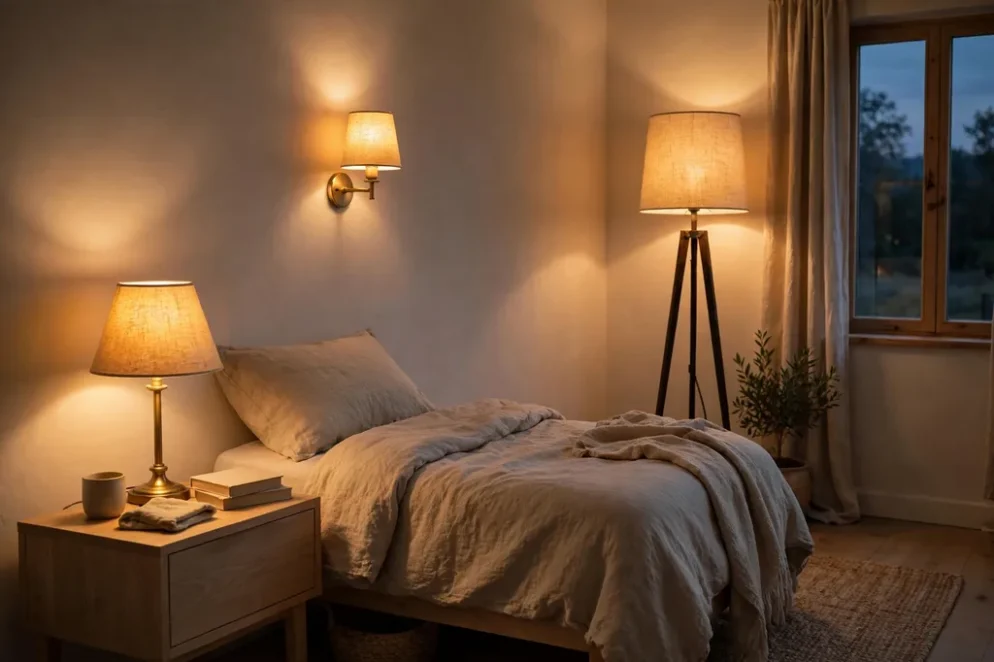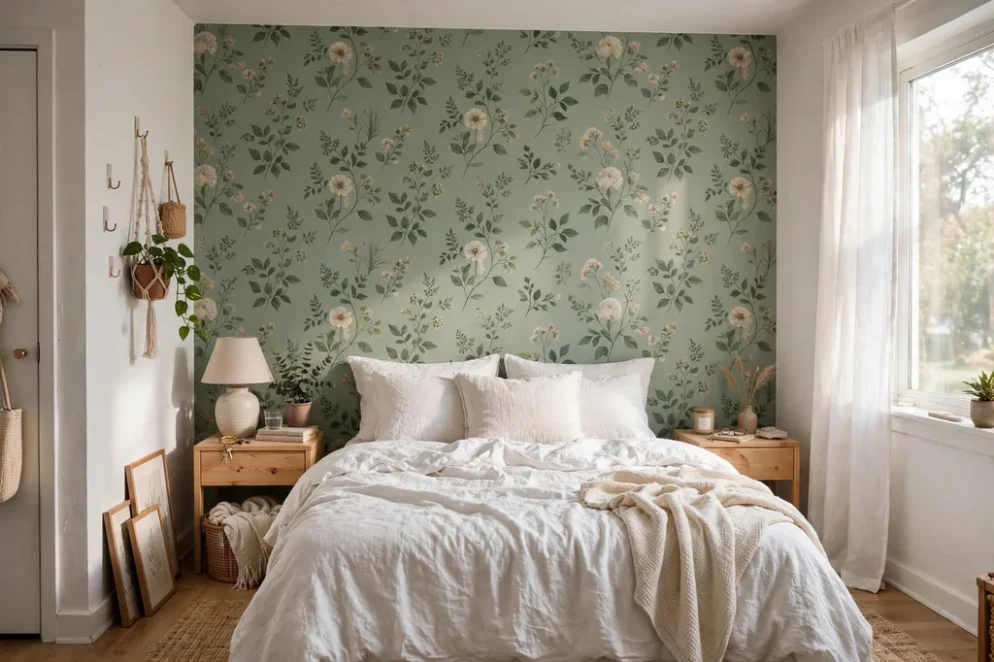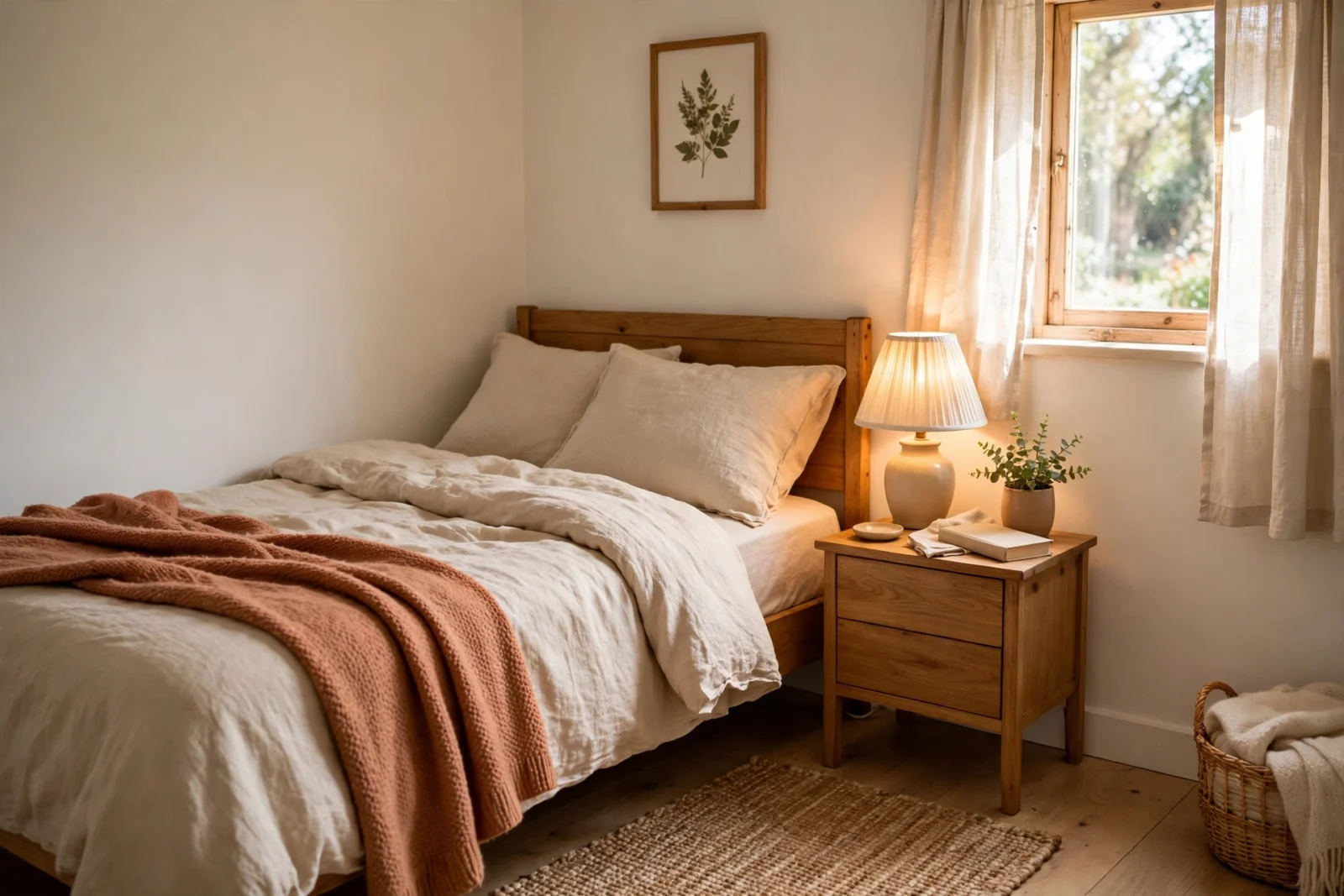
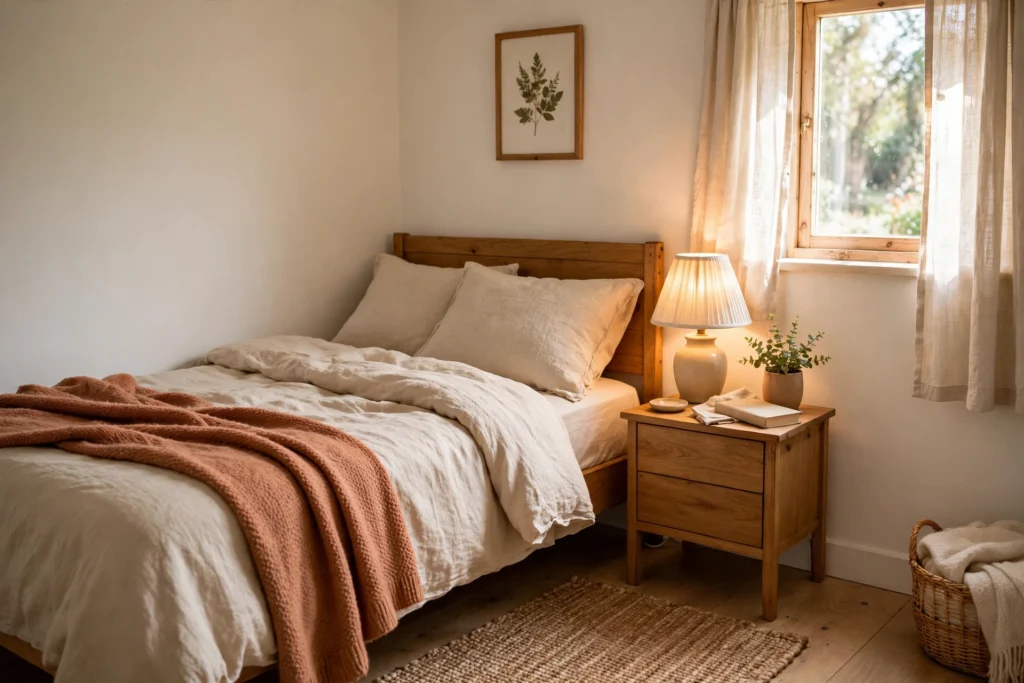
Bed against wall ideas are the simplest way to make a small bedroom work. Push the bed against the wall and the middle of the room opens up, space for a dresser, a desk, or just room to walk. It is the layout most small bedrooms use, and for good reason: it costs nothing, it takes an afternoon, and it makes the room feel bigger the moment you do it. That instant payoff is why a bed against wall plan is worth trying first.
This guide covers bed against wall ideas for a small bedroom: where to put the bed, how to make it, how to style it, and when the wall is the wrong choice. Every idea has exact measurements, walkway, nightstand width, and the gap between the mattress and the wall. Use this bed against wall guide before you move anything heavy.
Table of Contents
The numbers first
Best for: every idea in this guide, measure before you move the bed.
Four numbers decide whether a bed against the wall setup works:
- Bed sizes: twin 38 by 75 inches, full 54 by 75 inches, queen 60 by 80 inches, king 76 by 80 inches. A queen is the biggest bed that fits comfortably against the wall in most small bedrooms.
- Walkway: leave at least 24 inches of walking space on the open side of the bed. 30 inches feels comfortable if the room allows it. The main path from the door to the bed and the closet must stay clear.
- Gap: leave a 1 to 2 inch gap between the mattress and the wall. A bed pushed hard against the wall rubs the paint and traps moisture, a small gap fixes both.
- Nightstand: 18 to 20 inches wide is enough for a lamp, a phone, and a book. Wider than 20 inches and the nightstand eats the walkway.
Measure the wall, the walkway, and the door swing before you move anything. The best wall is usually the longest one without a door or a window. Compare your bed with the standard mattress sizes on Sleep Foundation before you buy, so the bed you choose fits the wall you measured.
Pros and cons
A bed against the wall is not perfect, it is just the best choice for most small bedrooms. Here is the honest list. It is the classic bed against wall layout.
Pros:
- Maximizes floor space. Pushing the bed against the wall frees the middle of the room, space for a dresser, a desk, or a reading chair.
- Creates a defined sleeping zone. In a studio or a shared room, the bed against the wall marks where sleep happens and where everything else happens.
- Adds stability. The wall holds the bed in place. A light frame stops shifting, and the bed does not slide when you sit on the edge.
- Feels cozy. The wall behind the bed feels like a cocoon, and it shields the head from drafts and noise.
- Costs nothing. Moving the bed is free. No new furniture, no drilling, no landlord permission.
Cons:
- Harder to make the bed. One side is against the wall, so you have to reach across the bed to tuck in the far side.
- One-sided access. If two people share the bed, the person on the wall side has to climb over the other to get out.
- One nightstand only. A bed against the wall usually gets one nightstand, on the open side. The wall side gets a shelf or nothing.
- Wall scuffs. The bed rubs the paint. Without a headboard or a gap, the wall marks up over time.
The pros win in most small bedrooms. The cons matter most for two people sharing the bed, and the verdict section below tells you exactly when that changes the answer. That is the honest bed against wall verdict for most small rooms.
1. Against the longest wall
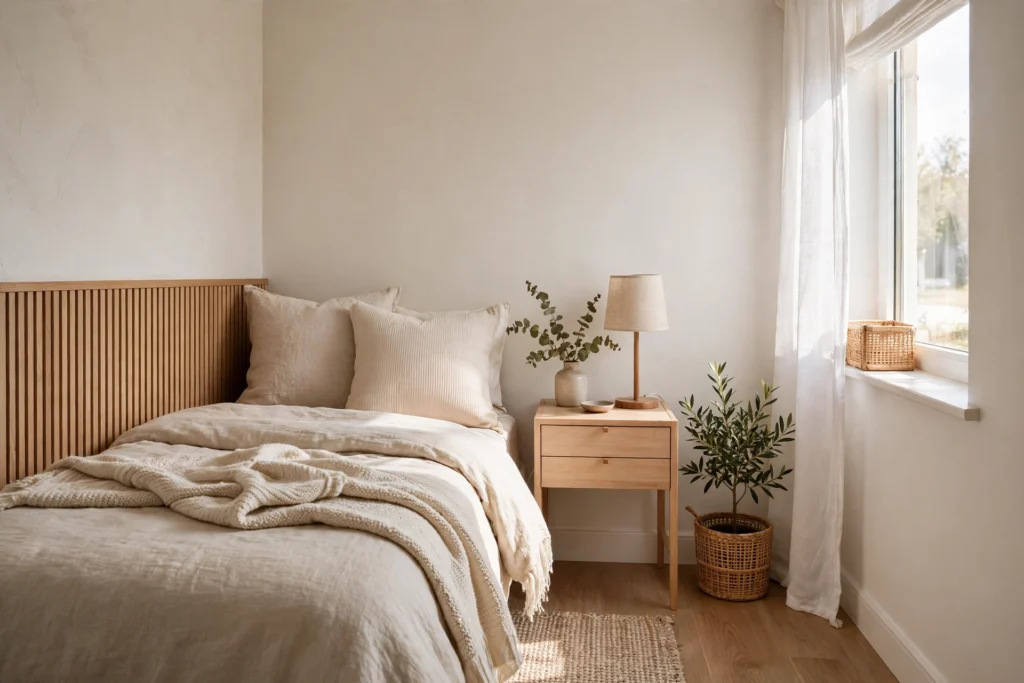
Best for: the default bed against the wall idea, the one that works in most rooms, most of the time.
Put the headboard against the longest wall without a door or a window. Center the bed on the wall if there is enough room; otherwise shift it slightly to create a wider walkway on one side. This is the most reliable starting point because it leaves the most open floor for everything else. A bed against wall arrangement like this needs no extra furniture.
- Size: a queen bed (60 by 80 inches) against a 10 to 12 foot wall leaves 24 to 30 inches of walkway on the open side and room for a nightstand. A twin or full bed against the same wall leaves room for two nightstands, one on each side, if the wall is long enough.
- Nightstand: one nightstand on the open side, 18 to 20 inches wide. Two nightstands is a habit, not a rule, in a small room, one nightstand and a slim shelf on the wall side keeps the footprint down.
- Dresser: put the dresser on the opposite wall, or on a side wall if the opposite wall is taken. Leave 24 inches between the bed and the dresser to walk through.
- What to watch: do not block the closet door or the bedroom door. The bed should never sit in the direct path from the door, you want to walk into the room, not into the mattress.
This is the idea to choose first. If the longest wall is free, the search is over. For most rooms, a bed against wall layout ends the search.
2. In the corner
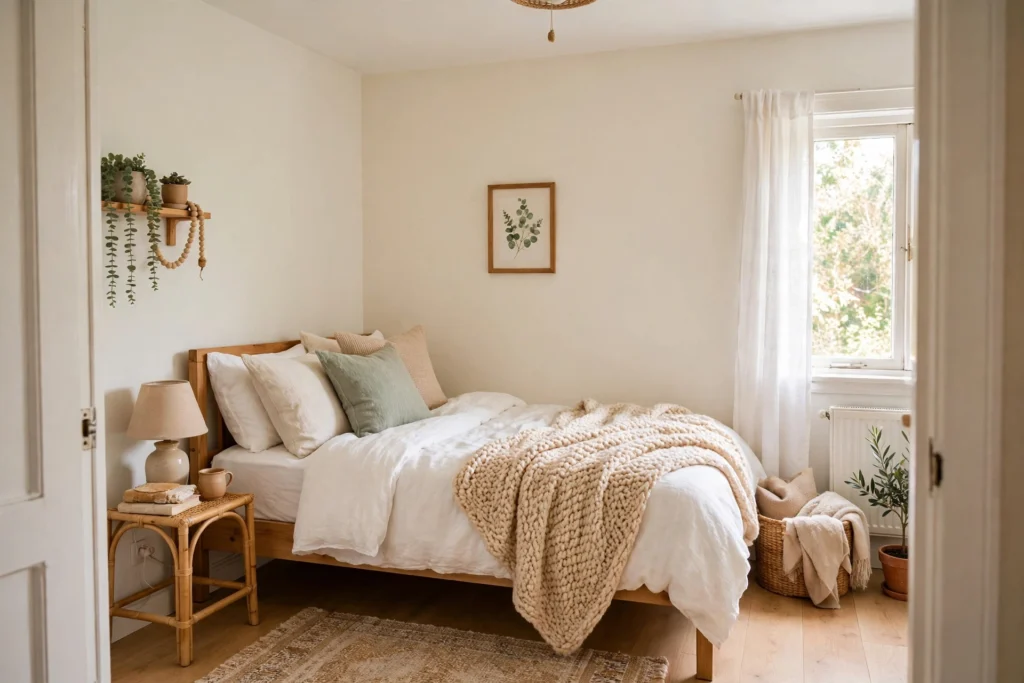
Best for: a small square room (10 by 10 feet), a corner bed frees the most floor.
Push the headboard against one wall and one side of the bed against the adjacent wall. The corner holds the bed, the middle of the room stays open, and you get two walls for shelves. A corner bed is the best bed against the wall idea for a square room because it uses the room’s most wasted space, the corner, and leaves the rest of the floor clear.
- Size: a queen bed (60 by 80 inches) in a 10 by 10 foot room leaves about 36 inches of walkway on the open side and room for a compact wardrobe on the wall beside it.
- Making the bed: the hard part. One side and the head of the bed are both against walls, so you have to reach across the bed to tuck in the far side. Use a fitted sheet and a duvet (no top sheet to tuck) and the problem mostly goes away.
- Shelves: shelves above the bed on one wall only, not both. Shelves on both walls make the corner feel closed in. Put the shelves above the long wall and leave the short wall clear.
- What to watch: a corner bed can feel boxed in, especially with a headboard on both walls. Keep the wall above the bed light, one frame or one shelf, not a wall full of things. And a corner bed is the worst choice for two people, the person on the wall side has to climb over the other every time.
Choose the corner when the room is square and the longest wall has a door or a window on it. For one person, it is the best use of a small room. For two people, it is the hardest to live with. A bed against wall corner is the best use of a square room.
3. One side against the wall
Best for: the half-way idea, one side of the bed against the wall, the other side open, with a nightstand on the open side.
This is the most common bed against the wall setup in a real bedroom: the bed’s long side touches the wall, the head is against the headboard wall, and the other long side is open with a nightstand. It is not a corner bed and not a centered bed, it is the middle ground, and it is the one most people actually live with.
- Size: a queen bed (60 by 80 inches) with one side against the wall needs 24 to 30 inches of walkway on the open side. The wall side needs no walkway at all, that is the whole point.
- Nightstand: one nightstand on the open side, 18 to 20 inches wide, with a lamp. The wall side gets a slim wall shelf for a phone and a book, a shelf 8 to 10 inches deep is enough.
- Who sleeps where: the person who gets up in the night sleeps on the open side. The person who sleeps through sleeps on the wall side. Decide this before you move the bed, not after.
- What to watch: the wall side sleeper needs a way to charge a phone, a shelf with a small outlet nearby, or a long charging cable run along the baseboard. And the wall side pillow will rub the wall, a headboard that runs the full length of the bed fixes it.
This is the setup to choose when two people share a small bedroom and the bed cannot go in the center. One side open is enough for the night-time person, and the wall side is fine for the person who sleeps through. That compromise is what makes a bed against wall setup work for couples.
4. With shelves above the bed
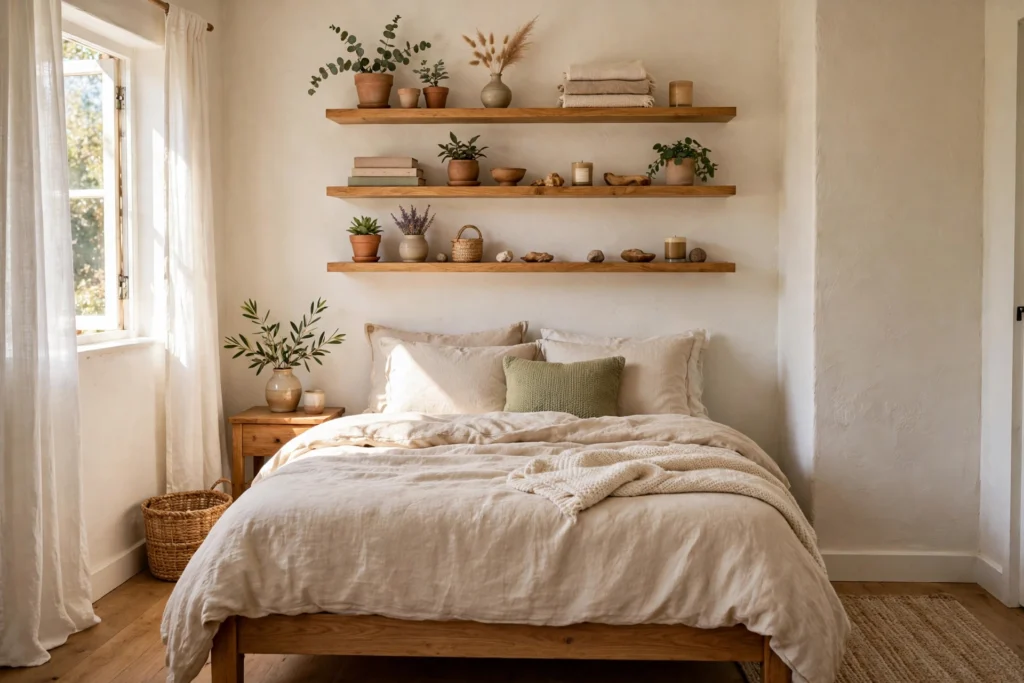
Best for: the storage idea, shelves above the bed turn the wall into a bookcase.
A bed against the wall leaves the wall above the bed free. Use it. Shelves above the bed hold books, plants, and a lamp, storage that takes no floor space at all. That free wall is the whole point of a bed against wall design.
- Size: shelves 8 to 10 inches deep, mounted 18 to 20 inches above the headboard. Deeper than 10 inches and the shelf hangs over the bed, you will hit your head sitting up.
- How many: one shelf for books and a plant, two shelves if the wall is tall. Three shelves makes the wall feel heavy and the bed feel boxed in.
- What to put there: books, a small plant, a clock, one frame. Not heavy things, a shelf above a bed should never hold anything that would hurt if it fell.
- Renter-friendly: floating shelves need drilling. If you rent, use a leaning ladder shelf beside the bed instead, or a tall narrow bookcase on the wall next to the bed. Same storage, no holes.
- What to watch: do not put the shelf directly above the pillow. Mount it above the headboard, 18 to 20 inches up, so nothing hangs over where you sleep.
Shelves above the bed are the best storage a small bedroom can get for the money, one shelf, a few books, and the room feels finished. One shelf is all a bed against wall storage plan needs.
5. With a headboard that does the work
Best for: the finishing idea, a headboard turns a bed against the wall from “pushed aside” into “placed on purpose.”
A bed against the wall without a headboard looks like it was pushed there because there was nowhere else to put it. A headboard changes that. It gives the bed a back, protects the wall from scuffs, and makes the wall the room’s focal point.
- Size: a headboard 36 to 42 inches high is enough for a bed against the wall. Taller than 42 inches and it blocks the window or dominates the wall. The headboard should be as wide as the bed, or 2 to 4 inches wider on each side.
- Types: a slim upholstered headboard is the softest option and the quietest, no banging against the wall. A wood headboard is the sturdiest and the easiest to clean. A fabric headboard (a large piece of fabric or a quilt hung on the wall) is the cheapest and the most renter-friendly, command strips hold it, no drilling.
- Wall protection: the headboard is the wall protection. Without one, the pillows rub the paint and the bed frame marks the wall. With one, the wall stays clean.
- What to watch: a headboard that is too tall under a window blocks the light. A headboard that is too narrow looks like a mistake. Measure the bed, then buy the headboard.
A headboard is the single best purchase for a bed against the wall. It costs less than a nightstand and it changes the whole room. It is the cheapest upgrade for a bed against wall setup.
Bed against wall vs. middle: the verdict
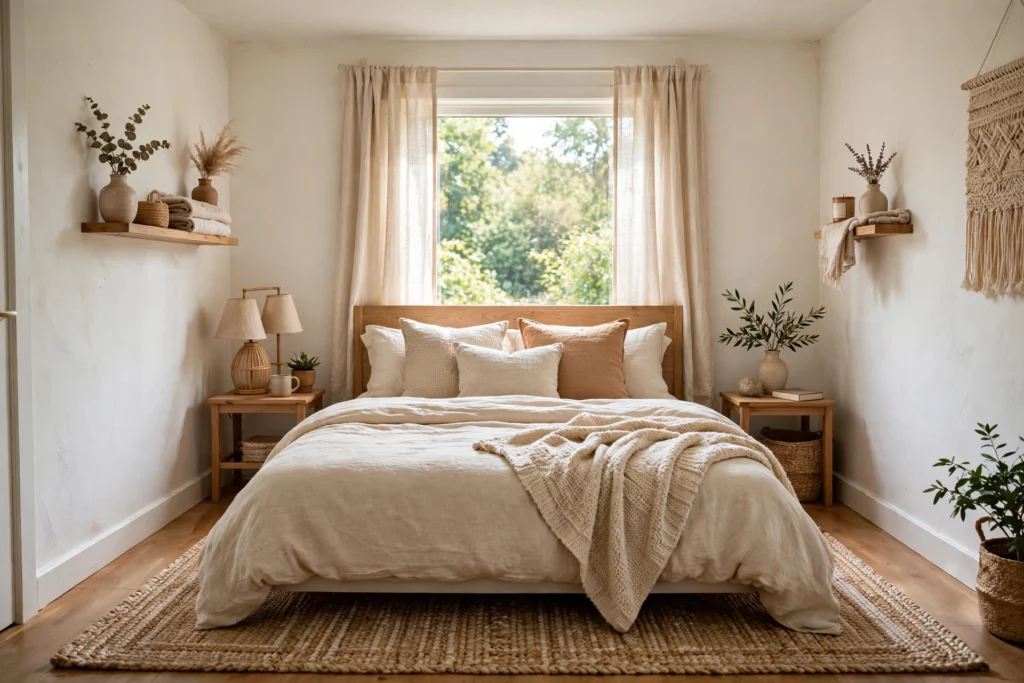
The wall wins in most small bedrooms. The middle wins in a few. Here is the honest comparison. Most small rooms land on the bed against wall side of that comparison.
| Question | Bed against wall | Bed in the middle of the room |
|---|---|---|
| Floor space | Leaves the middle of the room open | Eats the middle of the room |
| Walkway | One side open, 24 to 30 inches | Both sides open, 24 to 30 inches each |
| Making the bed | Harder, one side is against the wall | Easiest, walk around both sides |
| Nightstands | One, on the open side | Two, one on each side |
| Room size needed | Works in a 10 by 10 room | Needs at least 11 by 12 feet |
| Two people | Wall side has to climb over | Both sides feel the same |
Choose the wall when: the room is under 11 by 12 feet, you need a desk or a dresser, the room has a small closet, or you want shelves above the bed.
Choose the middle when: the room is at least 11 by 12 feet, two people share the bed and both get up in the night, making the bed matters to you, and you want the bed to be the room’s centerpiece.
Choose the corner when: the room is square, the longest wall has a door or a window, or you want the most open floor possible.
There is no wrong answer, there is only the answer that fits your room. Measure the room, check the walkways, and the right placement will show itself. Measure twice, then commit to the bed against wall option that fits.
For the full layout guide, 7 layouts with measurements, a layout plan, and renter rules, see Small Bedroom Layout Ideas: Bed Against the Wall vs. in the Center.
How to make a bed against wall work
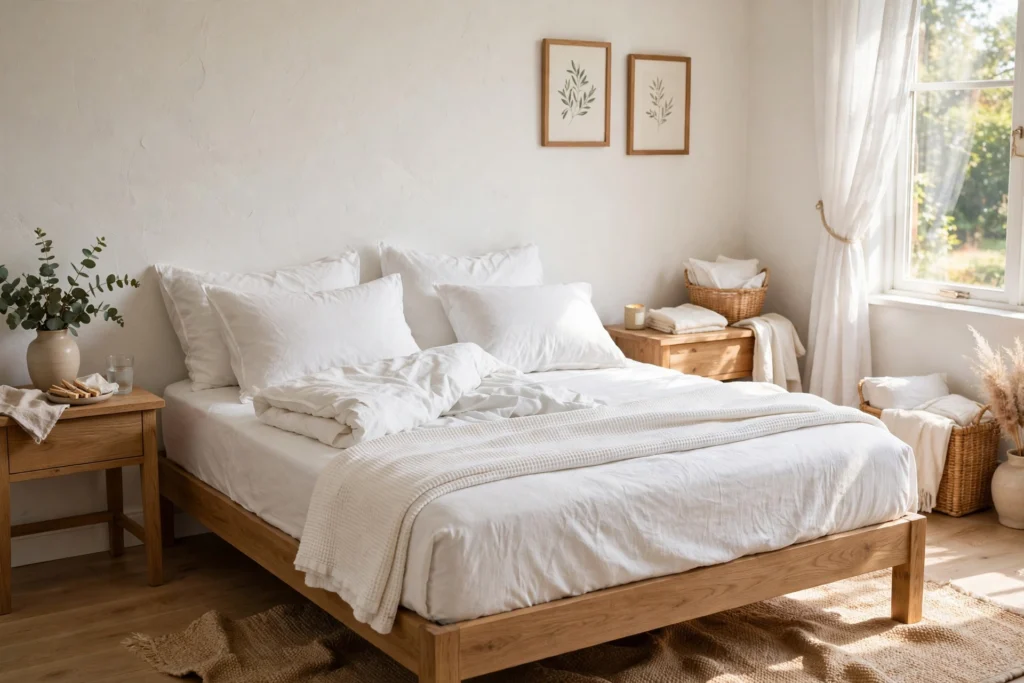
Making a bed against the wall is the one thing people worry about, and it is easier than it looks. The trick is the order, do the far side first.
- Pull the bed out. Pull the bed 12 inches away from the wall. This is the whole secret, with a gap, you can reach the far side.
- Fitted sheet first. Put the fitted sheet on, tucking the far corners first while the bed is pulled out.
- Duvet next. Lay the duvet on the bed, then tuck the far side under the mattress while you can still reach it.
- Pillows last. Put the pillows in place, then push the bed back against the wall, leaving a 1 to 2 inch gap.
- Smooth the near side. Smooth the duvet and the pillows on the open side. Done.
The easy version: skip the top sheet entirely. A fitted sheet plus a duvet is all a bed against the wall needs, no top sheet to tuck, nothing to reach across for. Most people who live with a bed against the wall drop the top sheet within a week, and they never miss it.
How long it takes: two minutes once you have the order. The first week it takes five. After a month, you do it without thinking.
Protecting the wall
A bed against the wall rubs the wall. The pillows, the headboard, the frame, all of it marks the paint over time. Three fixes, cheapest first: A little protection keeps a bed against wall finish looking new.
- The gap. Leave a 1 to 2 inch gap between the mattress and the wall. The bed never touches the wall, so the wall never marks. Free.
- A headboard. A headboard takes the rubbing instead of the wall. Upholstered is the quietest, wood is the sturdiest. A headboard also stops the pillows from sliding behind the bed.
- Wall protectors. Felt pads on the back of the headboard, or a strip of fabric behind the bed, stop scuffs. For renters, command strips hold a fabric panel on the wall, no drilling, no damage, and it comes down clean when you move.
Renter note: a bed against the wall is fully renter-friendly, nothing to install, nothing to drill. The wall protection is renter-friendly too: a gap, a headboard, and command strips are all things you take with you.
What not to do: do not push the bed hard against the wall with no gap. The mattress traps moisture against the wall, the paint marks, and the wall can grow mould in a damp room. A 1 to 2 inch gap is not a design choice, it is maintenance.
Making a bed against wall look good
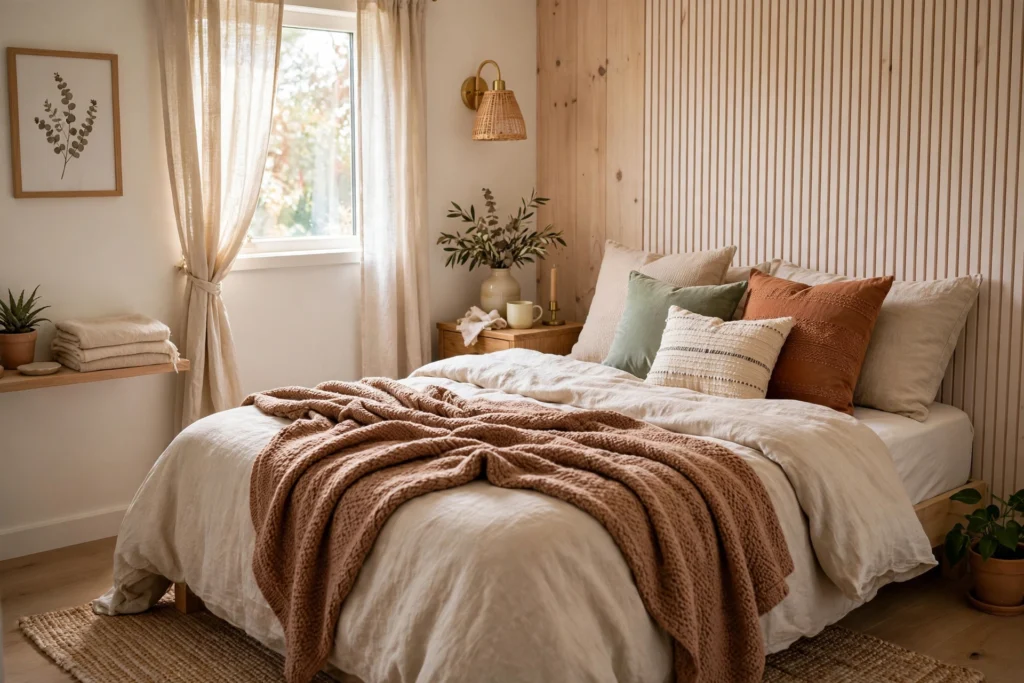
A bed against the wall can look like it was pushed aside, or it can look like it was placed on purpose. The difference is styling, and it takes three things: The goal is a bed against wall look that feels deliberate, not accidental.
- Bedding with layers. A fitted sheet, a duvet, two sleeping pillows, two cushions, and a throw blanket folded across the foot. The layers make the bed look finished, and the throw hides the fact that one side is against the wall.
- One thing above the bed. One frame, one shelf, or one piece of art above the headboard. Not three, one. A bed against the wall with one thing above it looks intentional. A bed with a wall full of things looks crowded.
- A lamp on the open side. A bedside lamp on the nightstand, warm light (2700K), makes the bed the warmest spot in the room. The wall side gets a small shelf with a book, no lamp needed, the room’s light reaches it.
Colors: light bedding makes a small bedroom feel bigger. White, cream, or pale grey bedding against a plain wall opens the room up. Dark bedding makes the bed feel heavy and the room feel smaller, save dark colors for the cushions and the throw. Pale bedding keeps a bed against wall corner feeling open.
What to avoid: a bed against the wall with no headboard, no art, and flat bedding looks unfinished. The bed is the biggest thing in the room, if it looks unfinished, the room looks unfinished.
When NOT to put the bed against the wall
The wall is the right choice most of the time. Not all of the time.
- Two people, both up in the night. If both people get up in the night, for water, for the bathroom, for a baby, the wall side person has to climb over the other every time. In that case, the bed goes in the center, or the room needs to be bigger.
- Mobility problems. If anyone who sleeps in the bed has trouble climbing, kneeling, or reaching, the bed needs walkway on both sides. A bed against the wall is not accessible from the wall side.
- A room over 11 by 12 feet. In a bigger room, a bed against the wall wastes the middle of the room. The center placement uses the space better and the bed becomes the room’s centerpiece.
- A wall with a radiator. A bed against a wall with a radiator blocks the heat, dries out the wood, and makes the bed too warm to sleep in. Move the bed to another wall.
- A damp wall. A bed against a damp or cold outside wall traps moisture behind the mattress. Leave a bigger gap (3 to 4 inches) or move the bed to an inside wall.
If none of these apply, the wall is the right choice. If one of them does, the wall is the wrong choice, and the center placement is the answer.
5 mistakes to avoid
1. No gap. Pushing the bed hard against the wall with no gap marks the paint, traps moisture, and can grow mould. Leave 1 to 2 inches.
2. Blocking the door or the closet. The bed against the wall should never sit in the direct path from the door, and the dresser should never block the closet. Check the door swing before you move anything.
3. No walkway. A layout with less than 24 inches of walking space on the open side of the bed is not a layout, it is a storage room with a bed in it.
4. A bed that is too big for the room. A king bed (76 by 80 inches) against the wall in a 10 by 10 room leaves 22 inches of walkway and no room for a dresser. A full bed is the honest answer in a very small bedroom.
5. Two nightstands when one fits. Two nightstands against the wall in a small room crowd the bed and eat the walkway. One nightstand on the open side and a slim shelf on the wall side is the right call.
FAQ
Is it bad to have your bed against the wall?
No. A bed against the wall is the best choice for most small bedrooms, it frees the middle of the room, creates a defined sleeping zone, and costs nothing. The only real downside is making the bed, and a fitted sheet plus a duvet fixes that.
Should a bed be against the wall?
In a small bedroom, yes, if the room is under 11 by 12 feet, the bed belongs against the wall. In a bigger room, the bed can go in the center. The deciding number is the walkway: if the center placement leaves less than 24 inches on both sides, the bed goes against the wall.
Should I put my bed against the wall?
If your bedroom is small, yes. Put the bed against the longest wall without a door or a window, leave 24 to 30 inches of walkway on the open side, and leave a 1 to 2 inch gap between the mattress and the wall.
How do I make a bed against the wall?
Pull the bed 12 inches out from the wall, put the fitted sheet and duvet on (far side first), put the pillows in place, then push the bed back, leaving a 1 to 2 inch gap. Skip the top sheet: a fitted sheet plus a duvet is all you need, and it takes two minutes.
How do I make a bed against the wall look good?
Layer the bedding (duvet, two cushions, a throw across the foot), put one thing above the bed (one frame or one shelf, not three), and add a warm lamp on the nightstand. Light bedding makes the room feel bigger; a headboard makes the bed look placed on purpose.
Start today
A bed against the wall does not need new furniture, it needs the right wall. Measure the wall, leave a 1 to 2 inch gap, and move the bed there. That is the whole job, and it takes an afternoon. The nightstand, the shelf, and the headboard follow the bed, not the other way round.
For the full picture, 7 layouts, a layout plan, and renter rules, see Small Bedroom Layout Ideas: Bed Against the Wall vs. in the Center.
Start with the tape measure. The room will tell you where the bed goes. Let it point you to the best bed against wall spot.