Your closet is not too small. It is just working with the wrong system. If every morning starts with digging through a pile, shoving hangers aside, and pulling out the one shirt you want from under three others, the problem is not your wardrobe. A single rod and one shelf were never a system. These small closet storage ideas turn one ordinary reach-in closet into five working zones, with exact measurements, a plan for shoes and seasons, and a whole setup that costs less than $150. Nothing here needs a drill, a screw, or your landlord’s permission.
This guide is built for a real rental closet: one rod, one shelf, a door that swings or slides, and a bedroom that is short on space. You will measure first, clear out what does not earn its place, then build the system zone by zone, and keep it that way with a five minute weekly reset.
Table of Contents
Measure First: The 5 Numbers That Decide Everything
Best for: everyone, before you buy a single organizer. Most organizers get returned because they were bought for a closet that was never measured.
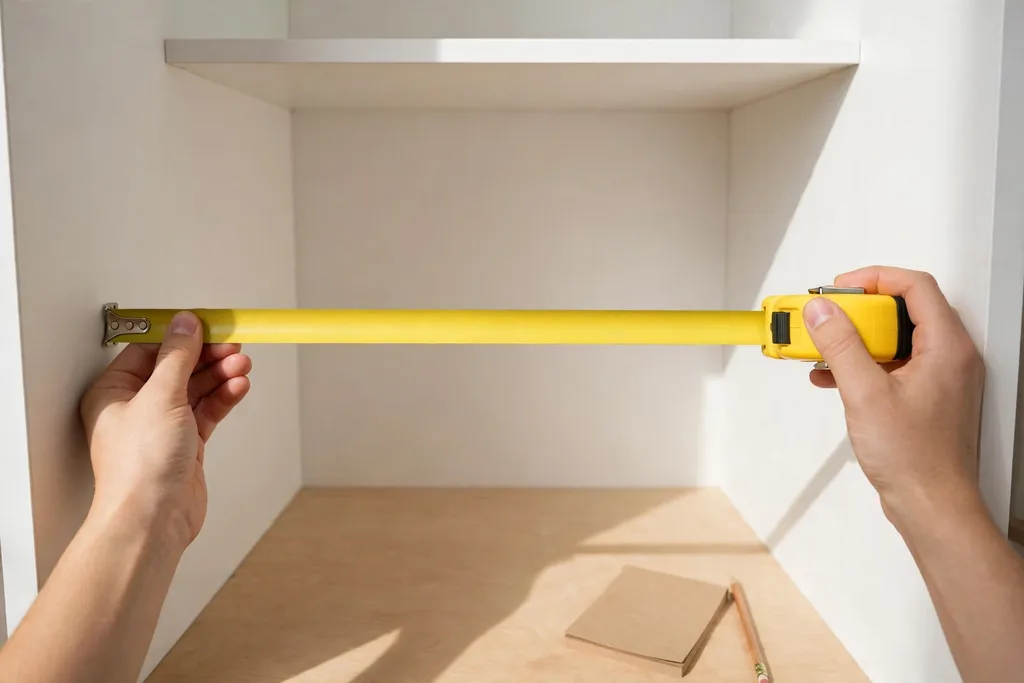
Organize small closet ideas fail when they start with shopping. Take five minutes and write down these five numbers before you spend anything: That is why these small closet storage ideas begin with a tape measure, not a shopping cart.
- Width: measure the inside wall to wall at rod height. Most small reach-in closets in rentals run about 5 to 6 feet wide. Write down your exact number, because every rod, rack, and bin must fit inside it.
- Depth: measure from the back wall to the inside of the door frame. About 24 inches is common. If your closet is shallower than 22 inches, standard hangers will hit the door, so you need slim hangers and a narrower shoe rack.
- Rod height: measure from the floor to the rod you already have. The double rod heights in this guide are built around it.
- Shelf depth and height: measure the top shelf from front edge to back wall, and from the shelf up to the ceiling. This tells you which bins fit up there.
- Door clearance: open the door fully and check the space behind it. An over-door organizer needs about 2 inches of clearance above the door, and sliding doors need a different solution than swinging doors.
Sketch the closet on one sheet of paper with these numbers on it. Draw the rod, the shelf, the door, and the floor as five empty boxes. Every zone in this guide fills one of them. This one sketch saves more money than any organizer, because it stops you from buying a 24 inch rack for a 20 inch gap or bins that are too tall for the top shelf. Keep this sketch with your small closet storage ideas plan so every purchase matches a real measurement.
The Declutter Pass: Keep Only What Earns Its Hanger
Best for: every closet, and the step most people skip.
Take everything out: every hanger, every folded stack, every shoe, every bag on the floor. Put it on the bed, wipe the closet empty, and look at what you actually own. Then sort into four piles and be honest about each one: It is the unglamorous first step in any small closet storage ideas plan that actually lasts.
- Keep: you wore it in the past 12 months, it fits, and you would buy it again today. This is the only pile that goes back in the closet.
- Donate: it fits and it is in good shape, but you have not worn it in a year. Someone else will wear it. Put it in a bag now, not later.
- Sell: good brands in good condition with real resale value. List them this week or move them to donate.
- Toss: stained, torn, stretched out, or missing buttons. Let them go.
Two tests settle the hard cases. The backwards hanger test: turn every hanger around so the hook faces out. After six months, any hanger still facing backwards holds something you never reach for, so donate it. The one season test: if you did not wear it at all last season when the weather was right, you will not wear it this season either. Both tests are part of these small closet storage ideas, and they keep the system honest.
Small closet organizing ideas only work after this pass, because the system is sized for what you keep, not for what you own. A closet that held 80 items and now holds 50 just gained real breathing room without spending a dollar. Do not put anything back until you have read the zone sections below. Putting things back into the old single-rod layout is how the mess returns in a week. Declutter first, then the small closet storage ideas in this guide can do their job.
Small Closet Storage Ideas for the Double Rod
Best for: the single biggest gain in any small closet. One rod becomes two, and hanging space roughly doubles without drilling a single hole.
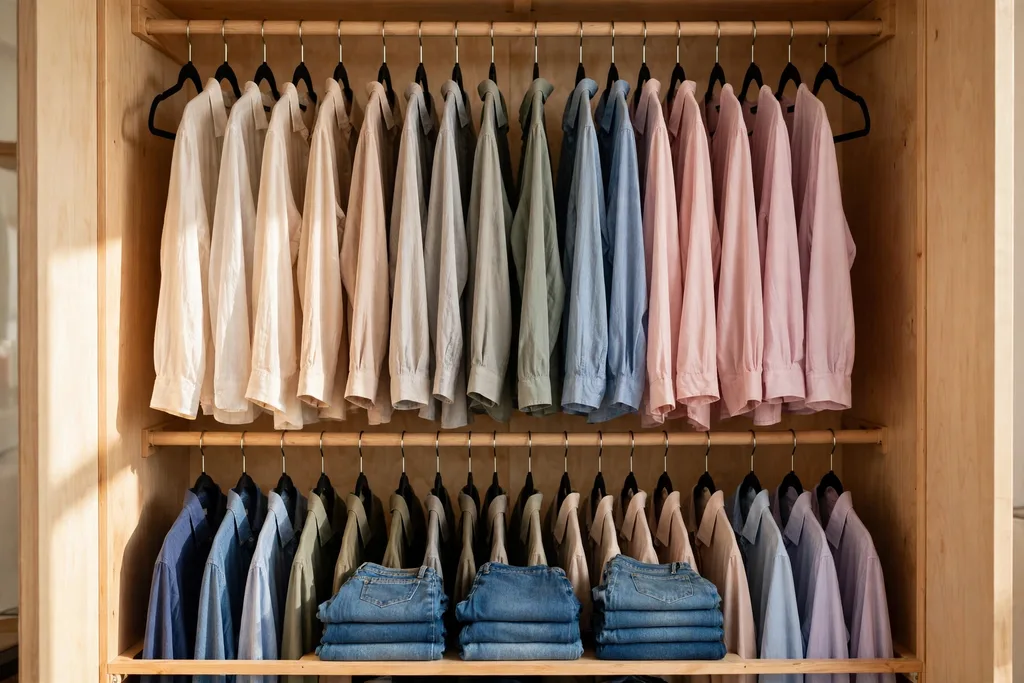
The best small closet storage ideas start with the rod, because hanging space is where a small closet wins or loses. A standard closet has one rod, and half the vertical space below it goes to waste. A tension double rod fixes that in ten minutes, with no tools.
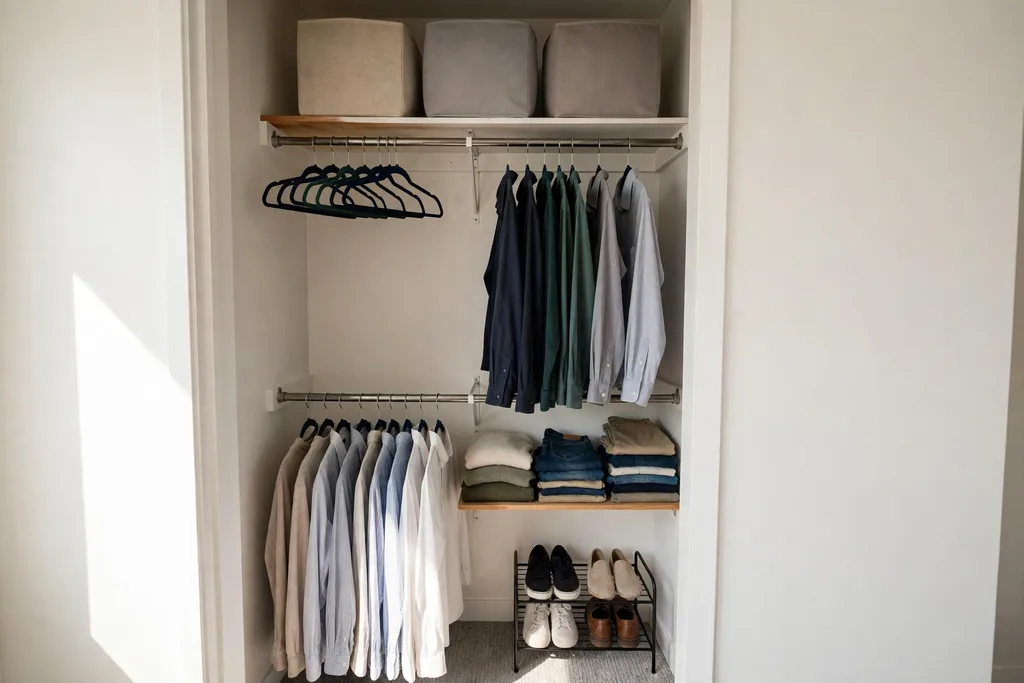
Here is the setup that works in most rental closets. The upper rod sits about 79 inches from the floor, and the lower rod about 40 inches. That spacing matters: shirts and blouses need about 40 inches of hanging length, so the top row hangs above the lower rod without its hems catching on the hangers below. Shorter items go on the lower rod, and the space under it stays open for shoes or a small dresser. This two-rod layout is the core of these small closet storage ideas: two rods, slim hangers, and nothing screwed into the wall.
Buy an adjustable tension rod, not a screw-mounted one. It wedges between the two side walls with spring pressure, holds a full row of clothes, and comes down in seconds when you move out, with no holes to patch. Measure your closet width first, then buy a rod that adjusts to cover it. Too short slips. Too long does not fit. The Home Depot’s small closet organization guide shows the same double-rod layout, with shirts on top and pants below.
Then switch the hangers. Slim velvet hangers are the cheapest space gain in this whole guide. They are about half the thickness of plastic hangers, they grip clothes so nothing slides off, and they free up at least 20 percent more hanging space on the same rod. One matching set also makes the closet look calm, because every garment hangs at the same height. Keep heavy wool coats and structured blazers on sturdier hangers with real shoulder support, and use the slim ones for everything else. It is a small change, but in these small closet storage ideas it frees up inches on every rod.
Arrange the rods by category, not by color alone. Tops together, pants together, dresses at one end where the full length hangs free. Long dresses and coats get one end of the upper rod and hang past the lower rod on that side. Cascading hangers help too: five take about 1 inch of rod space instead of five, which is perfect for camisoles or scarves. Category order is what makes these small closet storage ideas easy to keep up: you can see every group at a glance.
The rule is simple. If you cannot see a garment, you will not wear it. Leave a finger width of space between hangers. If the rod is packed so tight that hangers cannot slide, the closet still holds too much, and the declutter pass needs another round.
The Top Shelf: Labeled Bins You Can Reach
Best for: the things you need rarely but must find fast: out-of-season accessories, spare bedding, bags, and anything bulky.
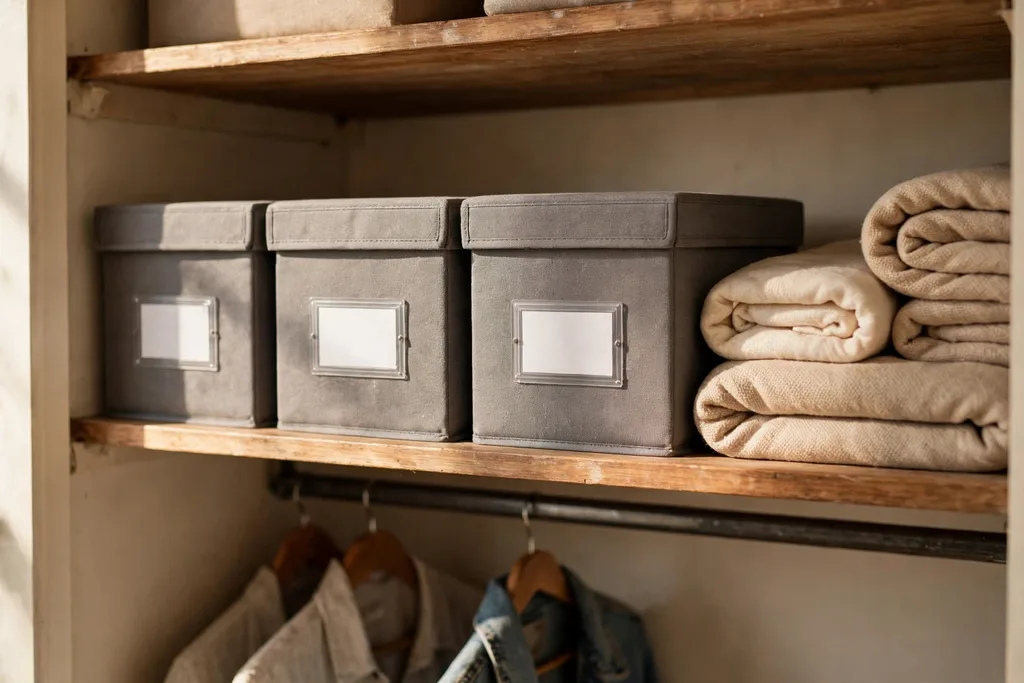
The top shelf is the most wasted space in a small closet, because it becomes a graveyard of loose items you cannot reach or identify. Fix it with three matching fabric bins with lids, and the shelf turns into real storage. Reclaiming it is one of the easiest small closet storage ideas, because the shelf is already there.
Measure the shelf height before you buy. The bins must slide in and out without a chair, and the lids must close flat. A bin that is too tall for the gap is useless. For most closets, bins about 10 to 12 inches tall fit with room to spare.
Give each bin one category and label it on the front, where you can read it from the floor. Vague labels work better than specific ones: “Winter Accessories” beats “Gloves, Scarves, and Hats” because the label stays true when the contents shift. Put the label on the end that faces out. A label you can read from the floor is what turns a bin into a working part of these small closet storage ideas.
What goes up top? Out-of-season clothes in lidded bins, spare sheets and blankets, bags you use monthly, and anything you need less than once a month. Down low: everything you wear this week. The test is reach. If you need a step stool to get it, it does not belong in your daily rotation.
Keep the bins light. A bin full of books or heavy denim is a hazard when you pull it down, so heavy things live on the floor, never above your head. Leave one hand width of space in front of each bin so you can pull it out without dragging the next one.
The Hanging Shelf Organizer: Folded Clothes That Stay Put
Best for: sweaters, jeans, t-shirts, and anything that should be folded, not hung. This is where closet storage ideas for small closets earn their keep.
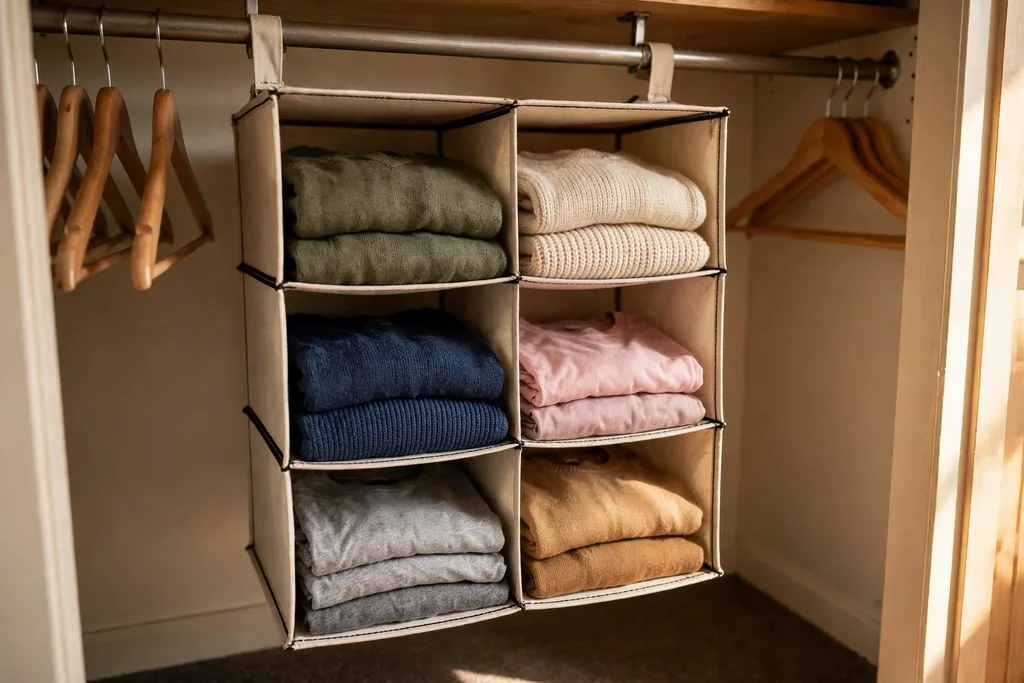
Folded clothes fall over because they have nothing holding them up. A hanging shelf organizer hangs from the rod and gives folded stacks six little cubbies with sides, so a stack of sweaters stays a stack. A hanging organizer is one of the simplest small closet storage ideas for folded clothes.
Hang one organizer at one end of the rod, on the side where your short clothes hang. Six shelves is the right size for most closets. Each cubby holds one category: t-shirts in one, sweaters in the next, jeans in the next. Fold everything the same way and the same size, so the stacks sit flat and even.
Keep folded stacks no more than about 12 inches high. Taller stacks topple when you pull one item from the middle, and then you are refolding the whole shelf. File fold the t-shirts and lighter items, standing them upright like papers in a filing cabinet, so you can see every shirt at a glance. Short stacks are the habit that keeps these small closet storage ideas from toppling.
Shelf dividers do the same job on a real shelf. Four clear dividers turn one long shelf into four bays, and each bay holds one stack. Knits always get folded, never hung, because hangers stretch them out of shape. Woven shirts, blouses, and dresses stay on hangers. That one rule alone saves half your sweaters.
Put the organizer where your hand naturally reaches. Daily items at eye and chest level, rarely worn items higher, heavy items lower.
The Door Interior: Free Storage You Already Own
Best for: shoes, accessories, and small items, using space that is empty in almost every closet.
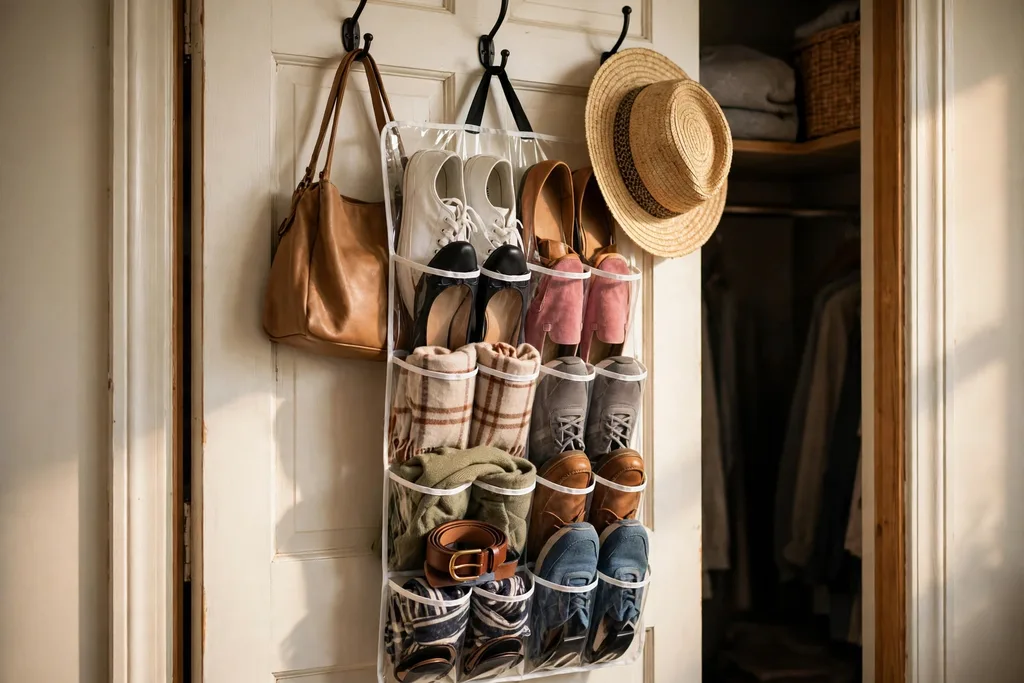
The inside of the closet door is free storage. It needs no drilling and takes nothing away from the rod or the shelves. An over-the-door organizer turns it into a wall of pockets. These small closet storage ideas use the door before buying anything new.
A clear over-the-door shoe organizer with 24 pockets is the workhorse here. It hangs over the top of the door on two hooks and comes off in seconds when you move. Use the pockets for more than shoes: flats and sandals in the lower pockets, scarves rolled in the middle, belts, sunglasses, and small bags up top. Clear pockets matter, because you can see what is in each one without opening it.
Add adhesive hooks inside the door for the things you grab daily: tomorrow’s outfit on one hook, a handbag on the next, a hat on the third. Command hooks hold well on a flat door and peel off cleanly at move-out time, which is exactly what a renter needs. Do not hang anything heavy on an adhesive hook. If it needs a screw to hold it, it does not belong on a rental door. Hooks are the smallest of these small closet storage ideas, and the most used every morning.
If your closet has sliding doors, the over-door organizer will not work. Use the side walls instead: adhesive hooks and a narrow hanging organizer do the same job. The rule is the same either way. Every hook should hold something you actually use, and nothing should hang so low that it blocks the door from closing.
The Floor and the Shoe Plan
Best for: the pile of shoes that eats the whole closet floor. Shoes need a plan, not a pile.
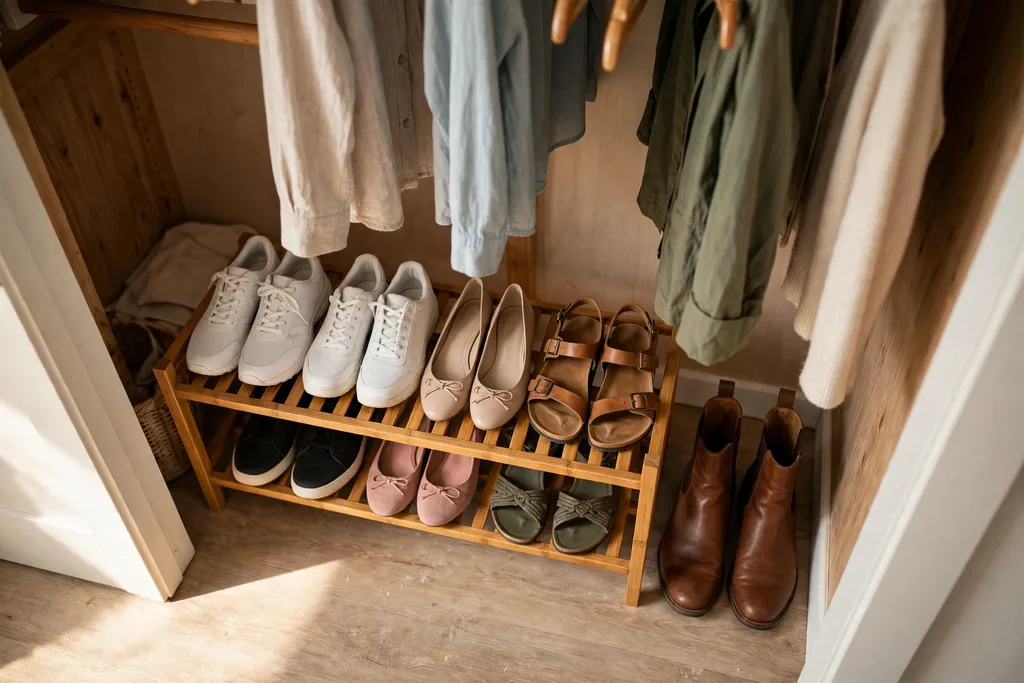
Shoes are the fastest way to lose a small closet, because a pile spreads until it covers the whole floor. Give them a plan with three homes, and the floor stays clear. A shoe plan is one of the most overlooked small closet storage ideas.
First, count your shoes. Most people wear 6 to 10 pairs regularly and own a few more for special occasions. If the count is over 15 pairs, the extras do not live in this closet. They live in the hall, under the bed, or in storage, and they rotate in when the season changes.
Second, build the floor zone. A two-tier shoe rack under the lower rod holds 8 to 10 pairs in the space of one row, because the second tier uses the empty air above the first row. Put daily shoes on the rack heel to toe, alternating direction so each pair takes less width. Boots stand upright at one end, not lying on their sides, so they keep their shape. A two-tier rack is the floor zone in these small closet storage ideas, and it holds 8 to 10 pairs in the space of one.
Third, use the door for the overflow. The over-door organizer holds about 12 pairs of flats, sandals, and light shoes in its pockets, which frees the floor rack for sneakers, boots, and the pairs you wear most. Hanging shoe shelves that clip to the rod hold about 8 pairs and work well for weekly shoes.
Sort shoes by season and by use. Daily shoes stay at the front of the rack at floor level. Weekly shoes go one tier up or into the door pockets. Off-season shoes go into lidded bins on the top shelf or under the bed, with a cedar block inside to keep them fresh. Store shoes in boxes only when they are off-season or rarely worn, because boxes protect them from dust. Daily shoes stay out of boxes so they get airflow.
Keep the floor clear of everything except the rack. No bags, no laundry, no later pile. A clear floor is what makes the closet feel big, and it lets you actually see the shoes you own. That clear floor is what makes these small closet storage ideas feel bigger than the closet is.
Seasonal Rotation: The Twice-a-Year Swap
Best for: the moment the weather changes and half your closet becomes useless for six months. Swap it out in one afternoon.
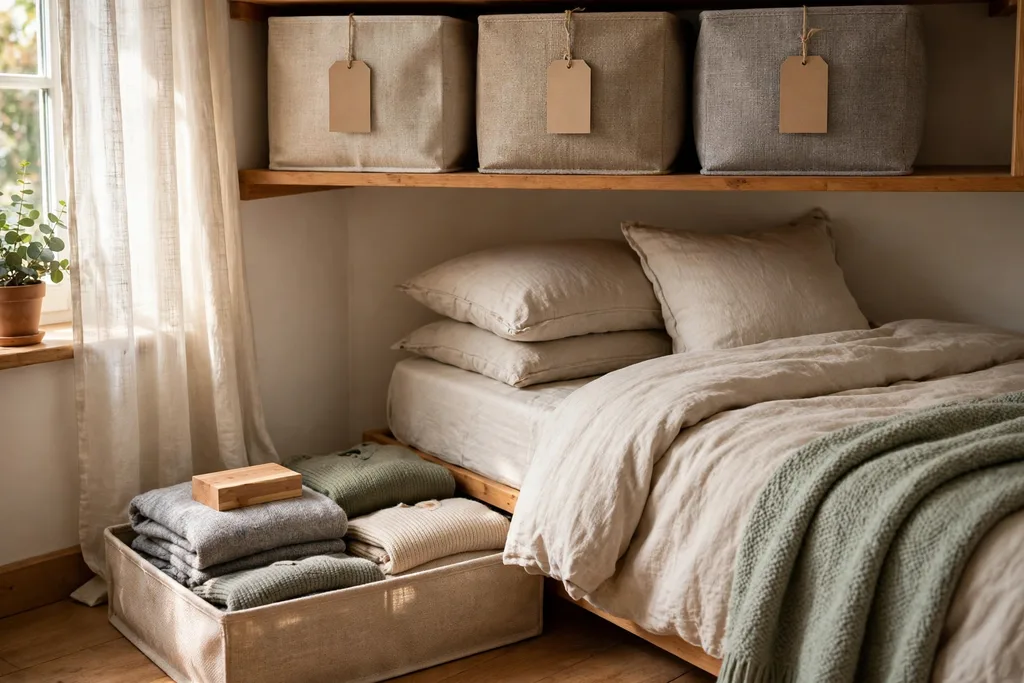
A small closet holds one season of clothes, not four. That is not a flaw, it is the rule that makes the whole system work. Twice a year, in spring and in fall, swap the seasons. Seasonal rotation is the habit that keeps these small closet storage ideas working, so one season never crowds out the rest.
Wash or clean everything before it goes into storage. Stains set permanently over months in a bin, and clean clothes do not attract moths. Fold knits rather than hanging them, and store them in lidded bins with a cedar block or a lavender sachet. Leather and fur need breathable fabric bags, never airtight plastic. Down jackets keep their loft better hanging loosely or folded loosely than squeezed flat in a vacuum bag.
The swap itself takes about an hour. Take the out-of-season clothes out, put the in-season clothes in, and move the bins. The out-of-season bin goes on the top shelf or under the bed, and the in-season bin comes down and gets unpacked. Low lidded bins about 6 inches tall slide under most beds, which makes under-bed space the natural overflow home for a small bedroom. An hour twice a year is all these small closet storage ideas ask for the seasonal swap.
For the full under-bed overflow system, including which bins fit and how to keep one category per bin, see the companion guide: https://honeyandhomestyle.com/small-bedroom-storage-ideas/
Label every bin with the season and the category, and tape a short list of the contents to the lid. The swap is also your second declutter pass of the year. Anything you did not wear all season goes straight into the donate bag, before it earns another six months in a bin.
The 5-Minute Weekly Reset
Best for: keeping the system working after the big organize day. A closet stays organized because of five minutes a week.
Organization is not a one-time project. It is a habit, and the habit is small: five minutes, once a week, same day every week. Pick laundry day and run this reset. These small closet storage ideas work because the habit is small enough to keep.
First, return the strays. Anything on a chair, on the floor, or on top of the dresser goes back to its home. Second, rehang anything that fell and refold one stack that toppled. Third, check the door pockets and the shoe rack. Fourth, pull one item you have not worn in a month and decide: wear it this week or donate it. Fifth, run the one in, one out rule. Anything new that came in this week means one old thing leaves, into the donate bag on the hook inside the door. Returning strays is the first step of the weekly reset in these small closet storage ideas.
Keep a small donate bag on a hook inside the closet door at all times. When you try something on and it does not work, it goes in the bag immediately, not back on the hanger. When the bag is full, it goes out. No second decisions, no maybe later pile. The donate bag is how these small closet storage ideas stay honest about what you actually wear.
This is the whole secret of storage ideas for small closets that actually last. The system does the heavy work on organize day, and the reset does the light work every week. Skip the reset for a month and the closet slides back. Keep it for a month and it becomes automatic.
Light the Closet So You Can See It
Best for: dark closets where you cannot tell navy from black. A light you can see by is worth more than another bin.
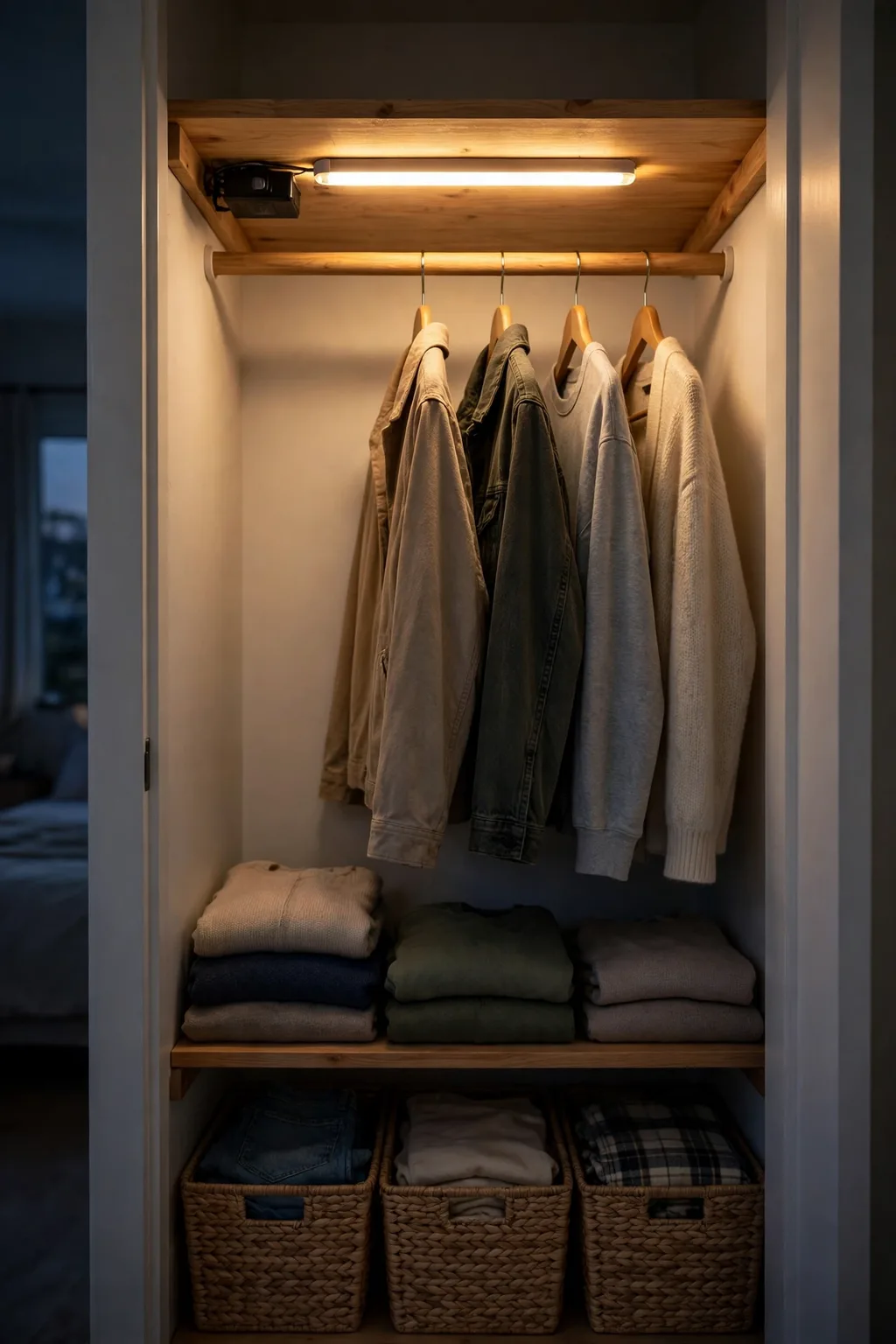
Most rental closets have no light at all, and a dark closet is an unused closet. You cannot find what you cannot see, so the back half of the rod becomes a dead zone. Fix it with a battery-powered motion sensor LED strip, stuck under the top shelf with adhesive backing. It turns on when you open the door and off when you close it, it needs no wiring and no landlord permission. Good lighting is one of the cheapest small closet storage ideas, and it makes every other zone easier to use.
Put the strip at the front edge of the top shelf, facing down, so the light falls on the clothes instead of into your eyes. If the closet is deep, add a second short strip on the side wall at eye level. Replace the batteries every few months, and keep a spare set in the top shelf bin. A lit closet gets used. A dark closet gets piled up.
The Whole Closet for Under $150
Best for: seeing the real cost before you buy. Here it is, item by item.
| Item | Price |
|---|---|
| Adjustable tension double rod, no drilling | $18 |
| Slim velvet hangers, 30-pack | $12 |
| Hanging shelf organizer, 6 shelves | $16 |
| Fabric bins with lids, set of 3 | $18 |
| Over-the-door shoe organizer, 24 pockets | $15 |
| Two-tier bamboo shoe rack | $22 |
| Shelf dividers, set of 4 | $10 |
| Command hooks, 8-pack | $8 |
| Battery motion-sensor LED light strip | $12 |
| Labels and marker | $5 |
| Total | $136 |
The whole system costs $136, which leaves $14 of the $150 budget unspent. Every price is a typical US retail price for a standard version, not a sale price and not a premium brand. Premium versions do not organize better, they just cost more. That $136 total is why these small closet storage ideas work for renters on a budget.
The cheapest path is $96. Skip the LED light strip and use the bedroom light, skip the shelf dividers and fold carefully instead, and buy one fabric bin instead of three, using a sturdy cardboard box with a lid for the other two. That leaves the rod, the hangers, the hanging organizer, the over-door organizer, the shoe rack, the hooks, and the labels, which is the working core of the system. Add the rest later, one piece at a time.
Do not buy the cheapest tension rod. It holds the weight of a full row of clothes, and a rod that slips at 2 in the morning is not a bargain. Spend the $18 on one with strong spring tension and rubber ends that grip the walls. A rod that holds is the one place these small closet storage ideas say not to cut corners.
Buy in This Order
Best for: spreading the cost and avoiding the classic mistake of buying bins before you know what goes in them.
- Measure and declutter, $0. Tape measure, paper sketch, four piles. Nothing gets bought until this is done.
- Tension double rod and slim hangers, $30. Hang the keep pile on the new rods first and see how much space you have.
- Hanging shelf organizer, $16. Folded clothes get their home next.
- Over-the-door organizer, $15. Shoes and accessories leave the floor and the rod.
- Two-tier shoe rack, $22. The shoe pile is gone.
- Fabric bins, $18. The top shelf gets its system last, now that you know what goes up there.
- Shelf dividers, hooks, and labels, $23. The finishing touches.
- LED light strip, $12. A comfort upgrade, not a storage upgrade.
Buy one step, install it, and live with it for a day before buying the next. Each step shows you what the next one needs to be. Following the order is part of these small closet storage ideas: measure first, buy last.
Sharing One Closet With Two People
Best for: couples sharing one small closet. Split it down the middle and give each person a real half.
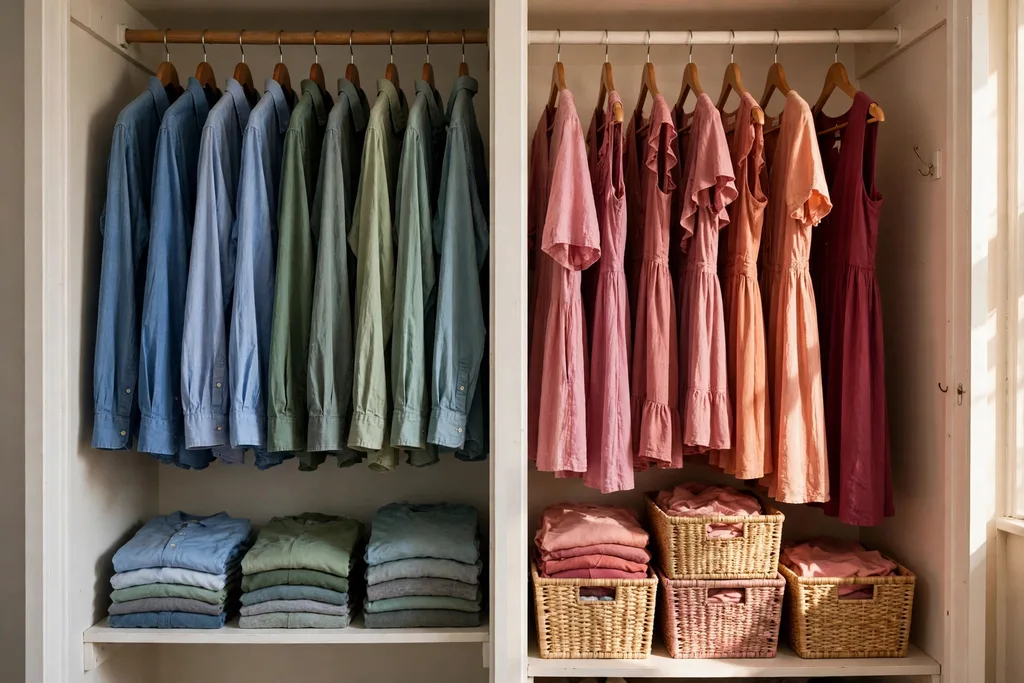
One closet, two people, and no system is how mornings turn into arguments. The fix is a line down the middle. Each person gets half the rod, half the shelf, and half the door pockets. The split does not have to be exactly equal: the person with more hanging clothes gets more rod, and the person with more folded clothes gets more shelf. Decide the split once, together, and then stop renegotiating it. A line down the middle is how these small closet storage ideas keep the peace.
Each side gets its own bins, its own door pockets, and its own hanger color or label, so there is no confusion about whose side is whose. Shared items, like the iron or the spare blankets, go on the top shelf in the middle. Shoes follow the same split: each person gets one tier of the rack and half the door pockets.
The shared closet works when each person maintains their own half in the weekly reset. Five minutes each, same day, both halves done. For more on making a small bedroom work for two people, see the companion guide: https://honeyandhomestyle.com/small-bedroom-ideas-for-couples/ That shared five minutes is all these small closet storage ideas need from two people.
7 Mistakes to Avoid
Best for: skipping the errors that send most closet systems back to chaos within a month.
1. Buying organizers before measuring. A bin that does not fit the shelf and a rack that is too wide for the floor both end up unused in a corner. Measure first, buy second, every time.
2. Keeping everything. An organizer cannot fix a closet that holds twice what it should. If it has not been worn in 12 months, it does not earn a hanger.
3. Using thick, mismatched hangers. Wire hangers bend, plastic hangers take twice the space, and a mix of both wastes inches. One matching set of slim hangers is the cheapest upgrade in the closet.
4. Overstuffing the rods. A rod packed so tight that hangers cannot slide is a wall of fabric, not an organized closet. Leave a finger width between hangers. If nothing fits, the closet still holds too much.
5. Ignoring the door. The door interior is free storage, and leaving it empty while shoes pile on the floor is the most common waste in a small closet. Leaving it empty is the most common waste in these small closet storage ideas.
6. Putting daily items on the top shelf. Anything you need every day must live between knee and eye level. The top shelf is for monthly and seasonal things only.
7. Skipping the seasonal swap. A small closet holds one season. Keeping all four in it all year means half the closet is dead space for six months. Swap twice a year, and the closet always holds what you actually wear.
FAQ
How can I organize a small closet with a lot of clothes?
Think vertically, not wider. Add a second rod, use the door, use hanging storage, and use hooks. Look for storage on every surface: the top shelf, the door interior, the side walls, and the floor. Declutter first, because organizing is always easier when the closet holds only what you wear. That vertical thinking is where these small closet storage ideas win the most space.
How do you organize a small closet without spending money?
Rearrange what is already there. Move the shelves if they adjust, use bins and boxes you already own, declutter, and label what you have. A tension rod is the only purchase that truly changes the space. Most closets improve more from removing 20 items than from buying 20 dollars of organizers.
What is the fastest way to organize my closet?
Start by decluttering. Take everything out, keep what you wore in the past year, and put the rest in donate or toss bags. A full declutter takes one afternoon, and it is faster than buying organizers for a closet that is still overstuffed.
How do I start decluttering my closet?
Commit to one block of time and do it in one go. Do not start when you will have to leave halfway through. Take everything out, sort into keep, donate, sell, and toss, and get rid of what you have not worn in a year. Donate or sell the items that could have a second life.
What is the best way to organize a lot of shoes in a small space?
Use multi-shelf racks and over-door hangers to maximize vertical space. A two-tier rack holds 8 to 10 pairs in the space of one row, and an over-door organizer holds about 12 pairs of flats and sandals.
Is it better to store shoes in boxes or out?
Boxes are best for rarely worn and off-season shoes, because they protect against dust. Daily shoes stay out of boxes so they get airflow and you can grab them without opening anything. Clear stackable boxes work well for the off-season pairs because you can see what is inside.
What is the best way to organize shoes in a small closet?
For shoe storage ideas for small closets, an over-the-door hanger is the best starting point, because it uses space that is otherwise empty. Add a two-tier rack on the floor for the pairs you wear most, and stackable bins on the top shelf for off-season shoes. Keep the floor clear of everything except the rack.
How do I organize my clothes in a small closet?
Free up space first by keeping only what you need close at hand, and moving seasonal and sentimental items elsewhere. Then group garments by type or by occasion, keep everyday items near the front, hang clothes in height order, and reserve shelf space for bulky items like jeans and knitwear. File fold t-shirts, standing them upright like papers in a filing cabinet.
How do you maximize space in a small closet?
Do not let vertical space go to waste. Slim hangers take up less room, an extra hanging rod doubles hanging space for short items, hanging organizers with cubbies hold shoes and folded clothes, and hooks on the back of the door hold accessories. Maximize shelving with bins and baskets, and use the floor for a shoe rack. Using every inch of height is the core of these small closet storage ideas for maximizing space.
How should I store out-of-season clothes?
Wash or clean them first, fold knits rather than hanging them, and store them in lidded bins with cedar or lavender. Leather and fur need breathable fabric bags, never airtight plastic. Down jackets keep their loft better hanging loosely or folded loosely than squeezed flat.
How do I remember what is in each closet bin?
Number every bin and keep a list of what is inside taped to the lid, or keep the list on your phone. Label the front with a vague category, like “Winter Accessories.” When the season changes, you will know which bin to open without lifting them all down. That numbered list is the memory these small closet storage ideas rely on, so you never open five bins to find one thing.
Start Today
Your closet does not need a renovation, a bigger bedroom, or a shopping spree. It needs five measurements, one honest declutter pass, and a system that gives every item a home. Start with the tape measure tonight, clear the closet this weekend, and build the zones one at a time. In a week, getting dressed will take five minutes instead of fifteen, you will wear the clothes you already own, and the small closet storage ideas in this guide will be doing their quiet work every single morning. The closet is small. The system is what makes it feel big.