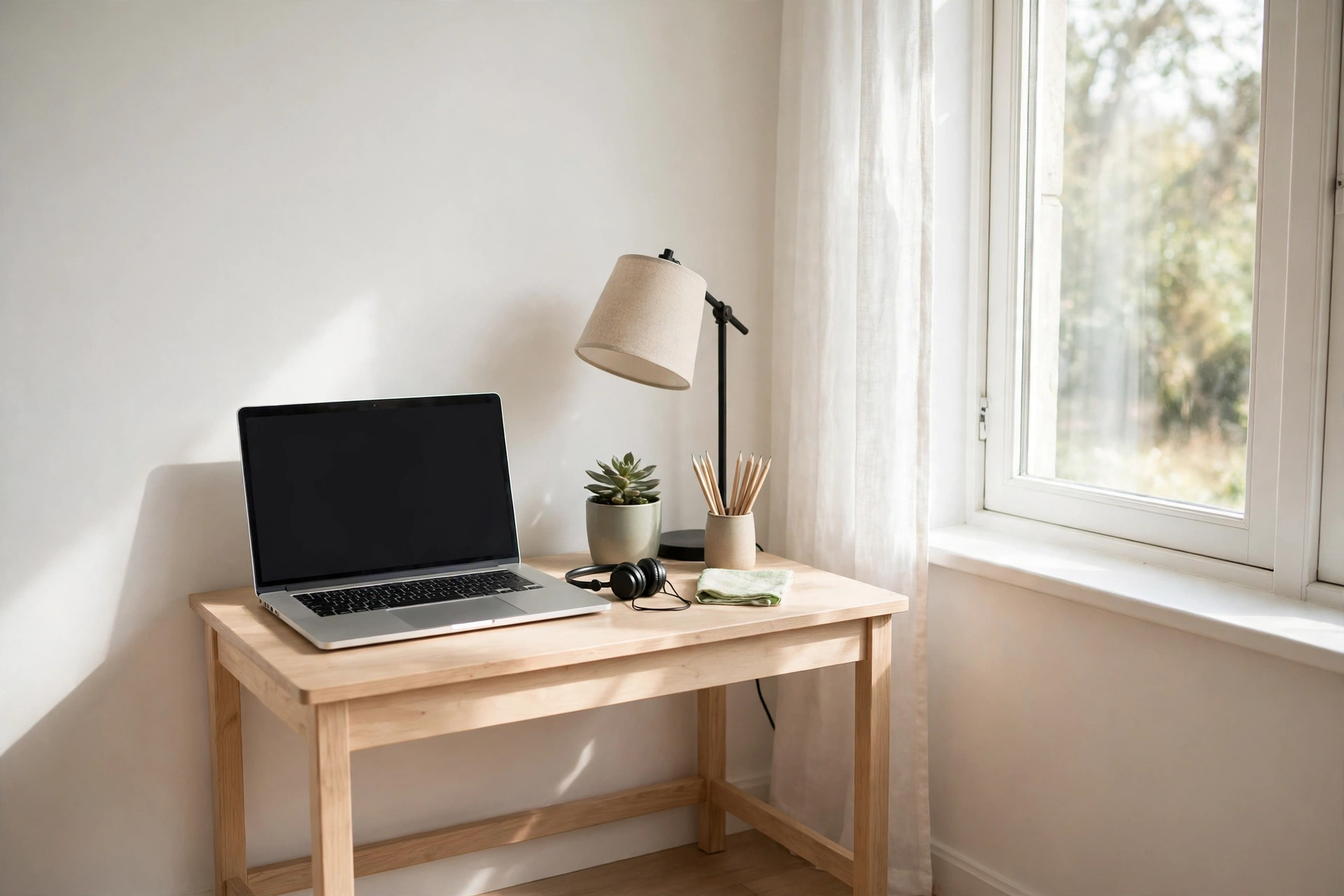
The wrong desk makes a small room feel smaller. The right one disappears into it. These desks for small spaces are not about buying the tiniest desk you can find, they are about matching the desk to the spot you actually have, with the exact measurements that make it work. A small computer desk that fits your wall, your chair, and your monitor beats a big desk squeezed into a corner every time.
This guide shows you how to measure first, then walks through eight desk types that work in small rooms, narrow desks, desks with storage, ladder desks, secretary desks, floating desks, standing desks, and fold-away desks, with the size, cost, and renter-friendly notes for each one. Most of them cost under $150, and none of them need a renovation. By the end, you will know which of these desks for small spaces fits your spot, your chair, and your budget.
Table of Contents
Measure your spot first
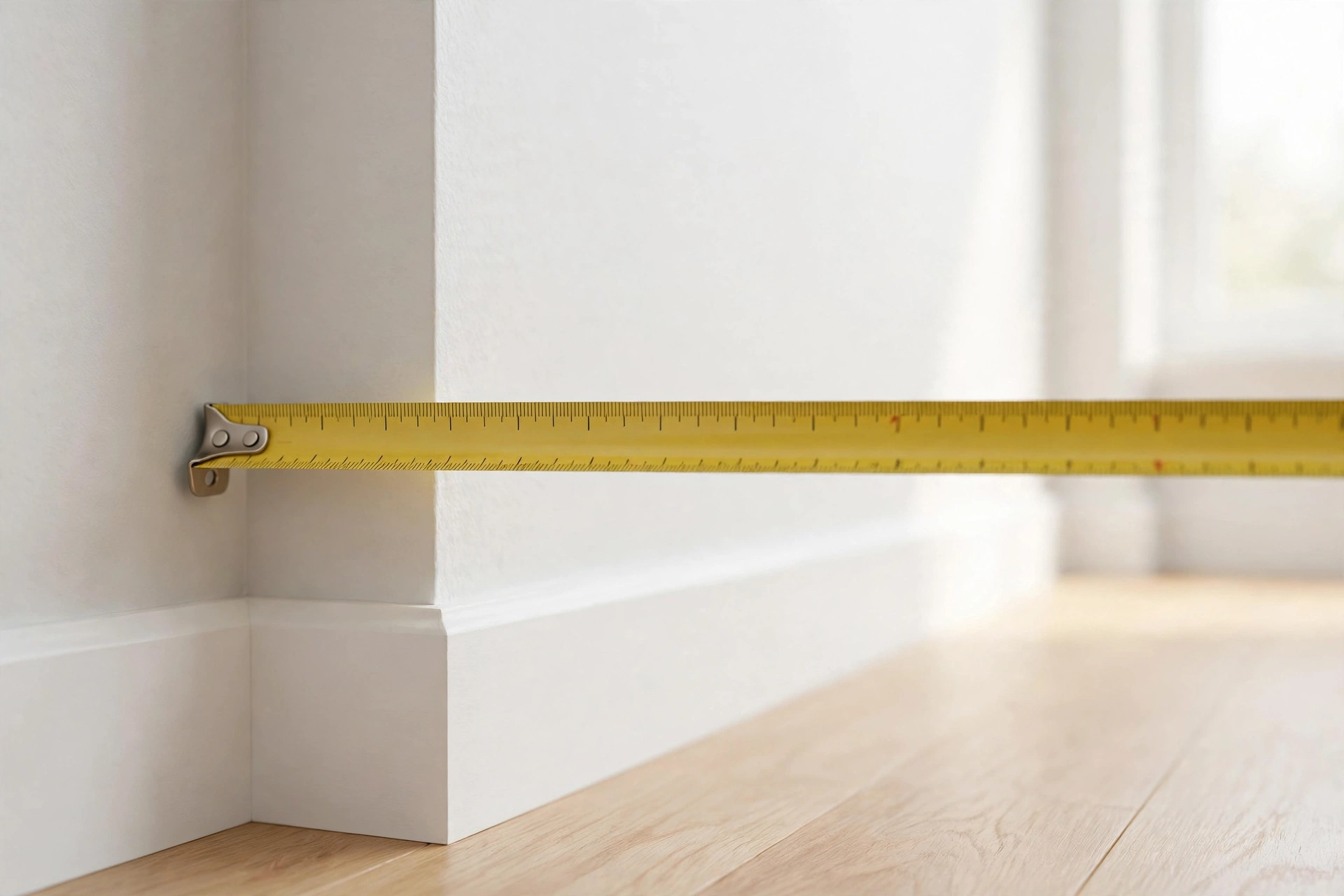
Do not buy a desk before you measure the spot it has to fit. Measure the width of the wall, the depth from the wall to the nearest furniture or walkway, and the height to any shelf or window sill above. Write the numbers down, every desk in this guide starts from them. Those numbers are the starting point for every one of the desks for small spaces in this guide. For an independent check of the same desk-height, monitor-distance, and chair-setup numbers, see the OSHA Computer Workstations guide.
Use these numbers for every desk type below:
- Desk height: 29 to 30 inches from the floor to the top of the desk. This suits most chairs and most people.
- Desk depth: 20 to 24 inches. A laptop alone fits on 20 inches. A monitor needs 24 inches, so your eyes stay 20 to 26 inches from the screen.
- Desk width: your wall width minus 1 inch for a freestanding desk, so it slides in without scraping the walls.
- Knee space: at least 24 inches wide and 27 inches high clear under the desk, with nothing blocking your legs.
- Chair pull-out: 30 to 36 inches of clear floor behind the chair, measured from the desk edge.
- Walkway: at least 30 inches between the desk edge and the nearest furniture, so you can walk past without turning sideways.
- Sockets: count them before you choose a spot. A desk setup needs 3 to 4 outlets, laptop, monitor, lamp, and phone charger. The best spot is the one nearest the sockets, not the prettiest one.
The formula is simple: your spot decides the desk, not the other way round. A desk that is 2 inches too wide will not fit, no matter how good it looks in the shop. That is the whole point of shopping for desks for small spaces: the spot comes first, the desk second.
1. The small computer desk
Best for: a bedroom or living room wall, 36 to 48 inches wide, for a laptop and one monitor.
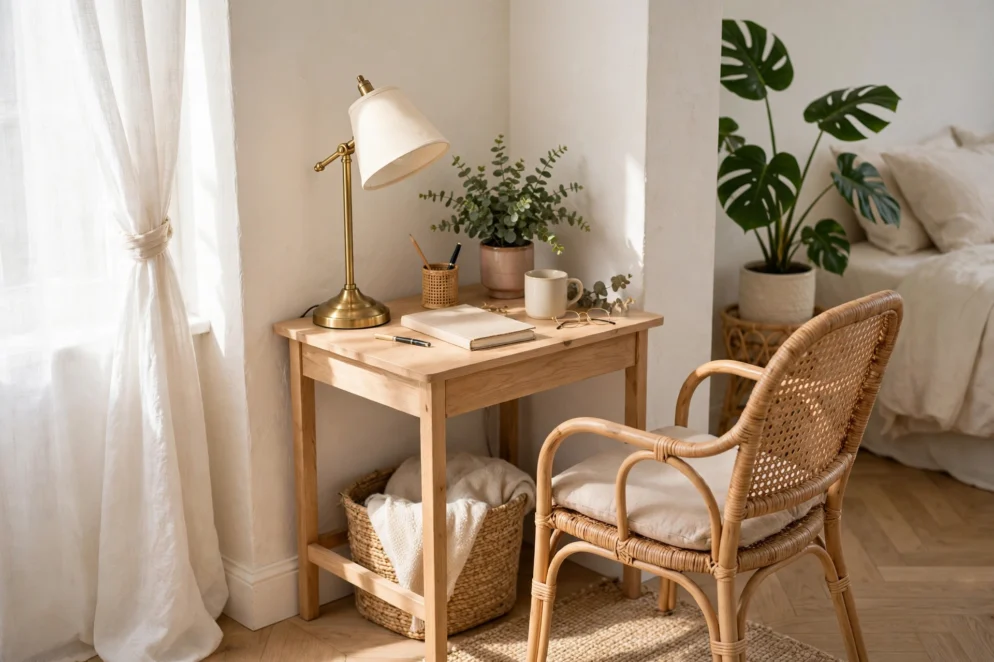
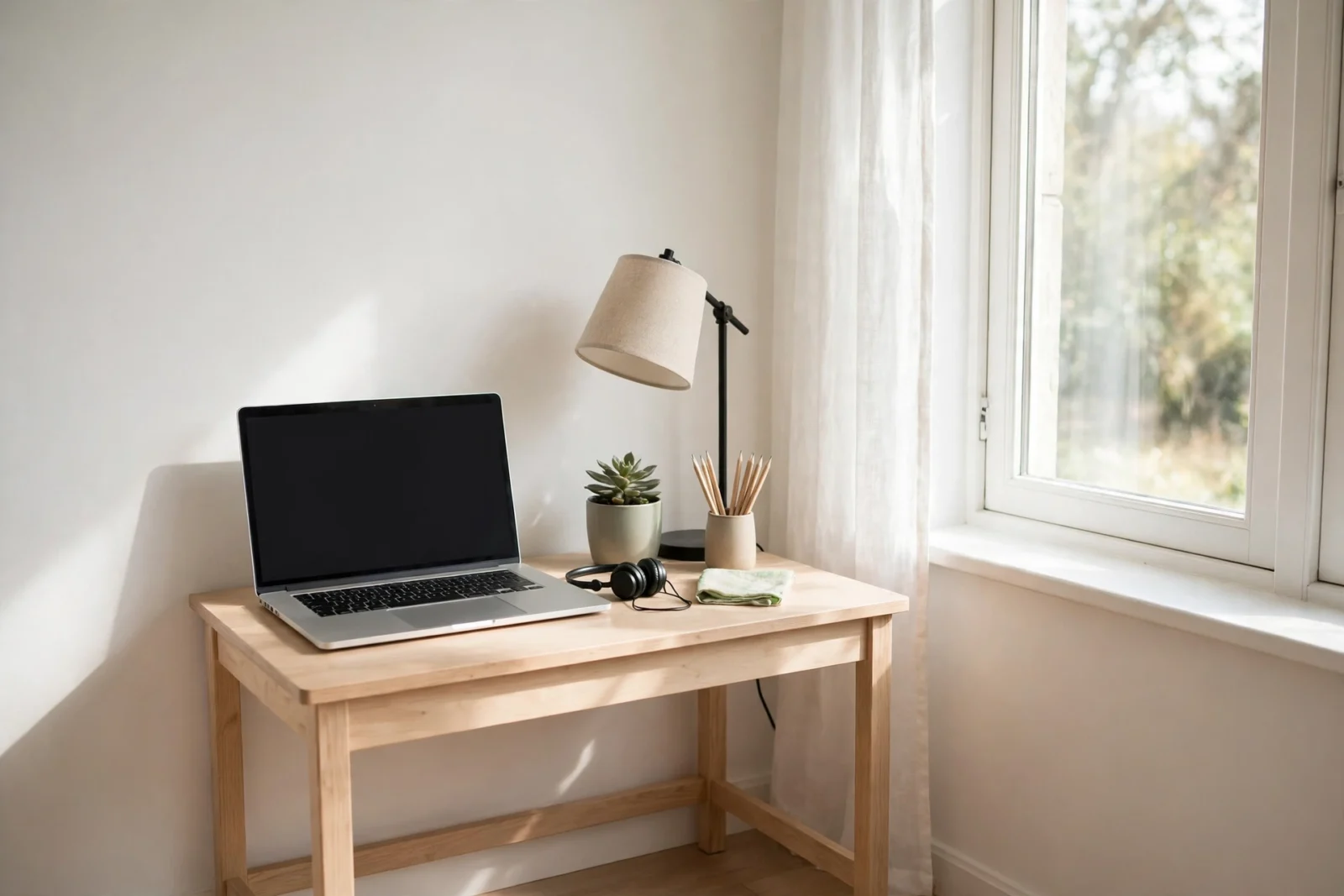
The classic small computer desk is a straight, simple desk: four legs, a flat top, and nothing underneath except your legs. It is the best starting point because it fits almost anywhere and costs the least. A computer desk for small spaces in this size holds a laptop, a monitor on an arm, a keyboard, and a lamp, and nothing else needs to live on it. For most buyers, this is the default choice among desks for small spaces, and the one to measure first.
- Size: 36 to 42 inches wide, 20 to 24 inches deep, 29 to 30 inches high
- For a monitor: choose 24 inches deep, with the monitor on an arm clamped to the back edge, so the screen floats above the desk instead of eating it
- Cost: usually $70 to $140
- Renter note: fully no-drill. It stands on its own legs and moves with you.
Skip the version with a raised monitor shelf built in. It looks useful, but it fixes the monitor height and steals 6 inches of depth you need for a keyboard. A clamp-on monitor arm does the same job and moves with you.
2. The narrow, skinny, thin desk
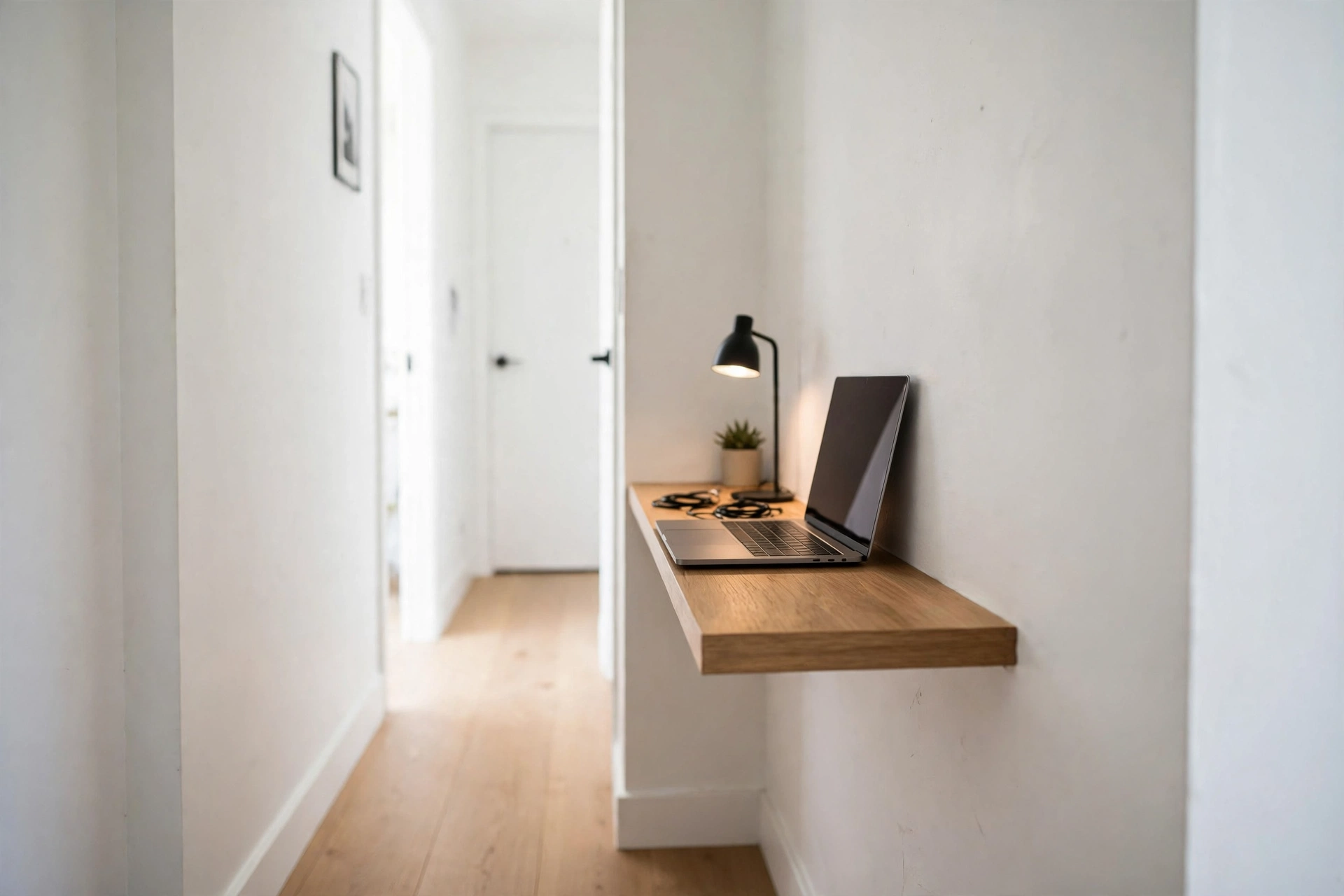
Best for: a hallway, a wall between two doors, or a gap under 36 inches wide.
A narrow desk, also sold as a skinny desk or a thin desk, is a desk that gives up depth instead of width. Where a normal desk is 24 inches deep, a narrow desk is 16 to 20 inches deep, so it fits walls and gaps a normal desk cannot. It is the right desk when the problem is not the width of the wall but how far the desk sticks out into the room. When the gap is under 36 inches, narrow desks for small spaces like this one are often the only desk that fits at all.
- Size: 30 to 36 inches wide, 16 to 20 inches deep, 29 to 30 inches high
- For a laptop only: 16 to 18 inches deep is enough for a laptop and a notebook. Do not put a monitor on a desk under 20 inches deep, the screen will sit too close to your eyes.
- Cost: usually $60 to $120
- Renter note: fully no-drill. Slim legs mean it slides into gaps other desks cannot use.
The trade-off is real: a narrow desk has no room for a monitor, a printer, or piles of paper. If you need a monitor, go back to idea 1 and find 24 inches of depth somewhere, even if it means moving a chair or a shelf.
3. The desk with drawers and storage
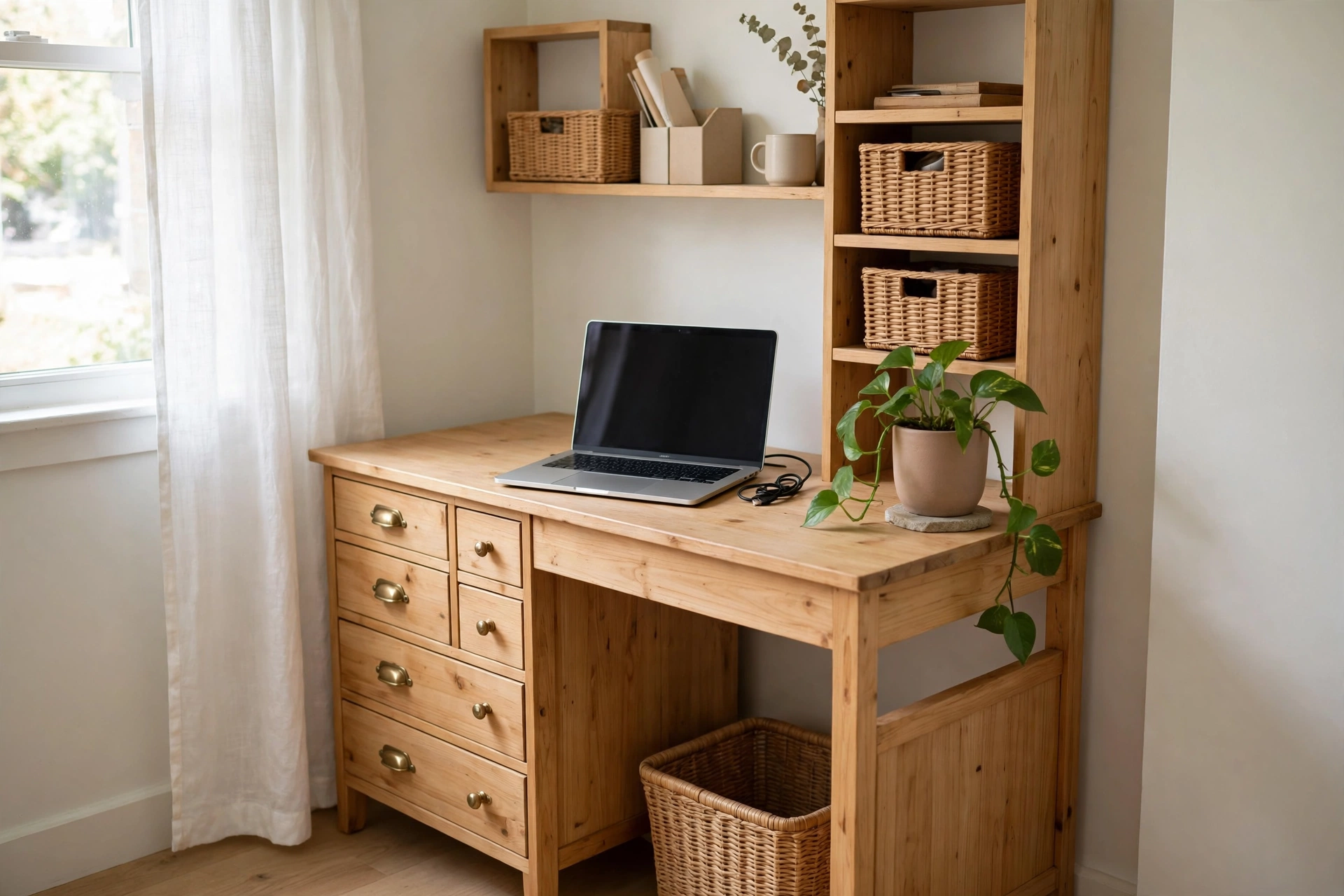
Best for: a desk that also has to hold pens, chargers, notebooks, and paperwork.
A small desk with storage solves the real small-space problem: it is not the desk that is too small, it is everything that has nowhere else to go. A desk with one drawer unit on one side keeps the desktop clear and gives every small thing a home, without adding a separate cabinet to the room. That is why desks for small spaces with drawers beat a bigger desk with nowhere to put anything.
- Size: top 36 to 48 inches wide, 20 to 24 inches deep, 29 to 30 inches high
- Drawer unit: 15 to 18 inches wide, 22 inches deep, with the top drawer no higher than 24 inches so your knees clear it
- Knee space: keep at least 24 inches of clear width on the sitting side, with no drawer unit under your legs
- Cost: top plus one drawer unit, usually $100 to $150
- Renter note: nothing is fixed to the wall. The top rests on the drawer unit and a leg, so the whole desk comes apart when you move.
Put the drawers on the side of your non-writing hand. If you write with your right hand, drawers on the left keep the desktop clear where your arm moves. And keep one drawer empty on purpose, a desk with no empty drawer fills up in a week, and then the desktop becomes the drawer.
4. The ladder desk
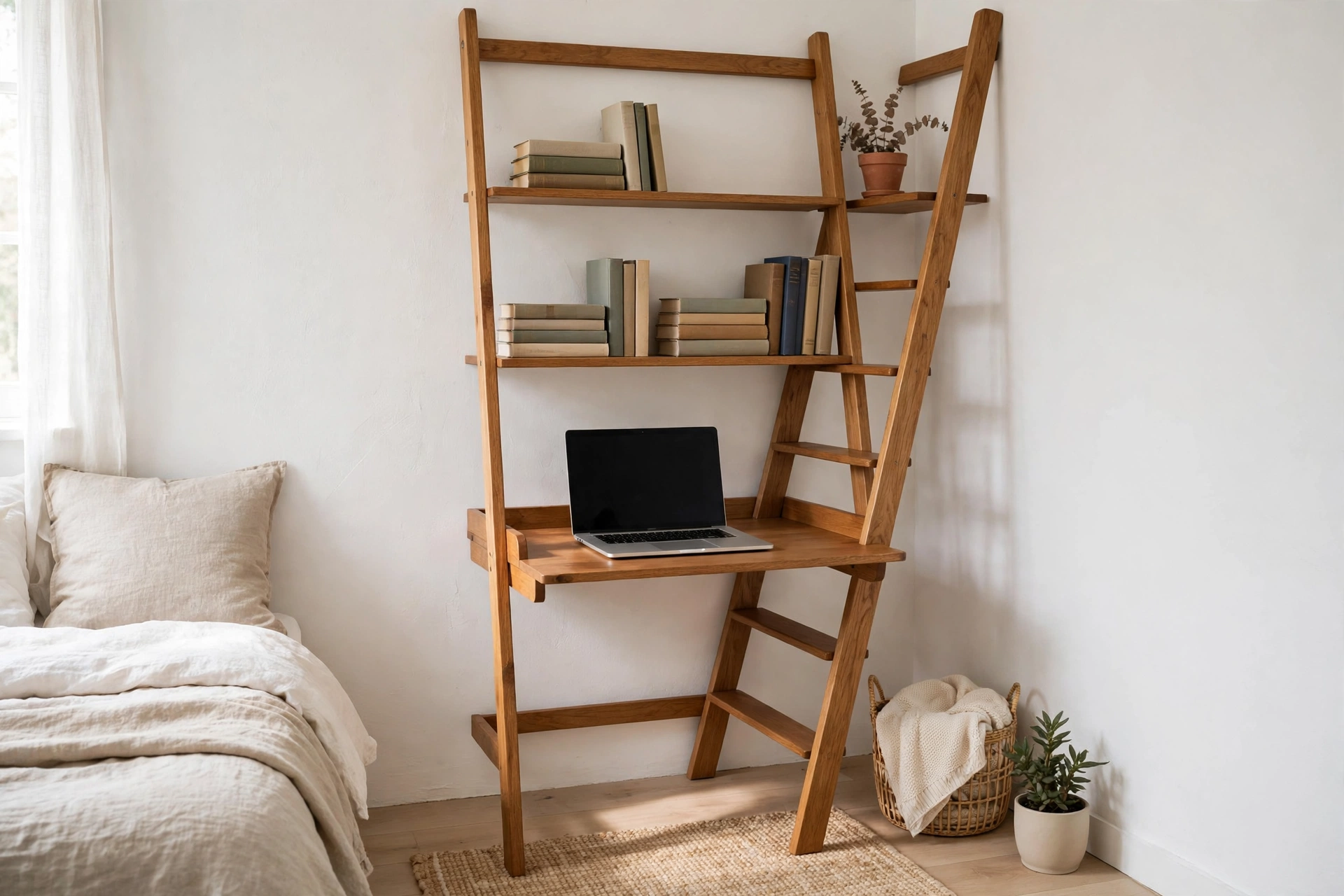
Best for: a corner or a narrow wall where you need storage and a desk in one piece of furniture.
A ladder desk leans against the wall like a ladder, with shelves going up and a desk surface at the bottom. It uses vertical space instead of floor space, so it fits where a desk plus a bookshelf would not. The desk part is small, a laptop and a notebook, and the shelves above hold books, files, and a plant. In a tight room, ladder desks for small spaces earn their place by using the wall above the desk, not the floor around it.
- Size: 30 to 36 inches wide at the desk, 16 to 20 inches deep at the desk, shelves 10 to 12 inches deep above
- Height: 60 to 72 inches tall overall, with the desk surface at 29 to 30 inches
- Cost: usually $80 to $140
- Renter note: most ladder desks lean and need one small bracket at the top for safety. If you cannot drill, choose a freestanding leaning design with a wide base, and never let a child climb it.
The mistake with ladder desks is buying one with a desk surface under 16 inches deep. A laptop needs 16 inches just to sit flat, and your wrists need 4 more inches in front of it. Measure the desk surface itself, not the width of the whole unit.
5. The secretary desk
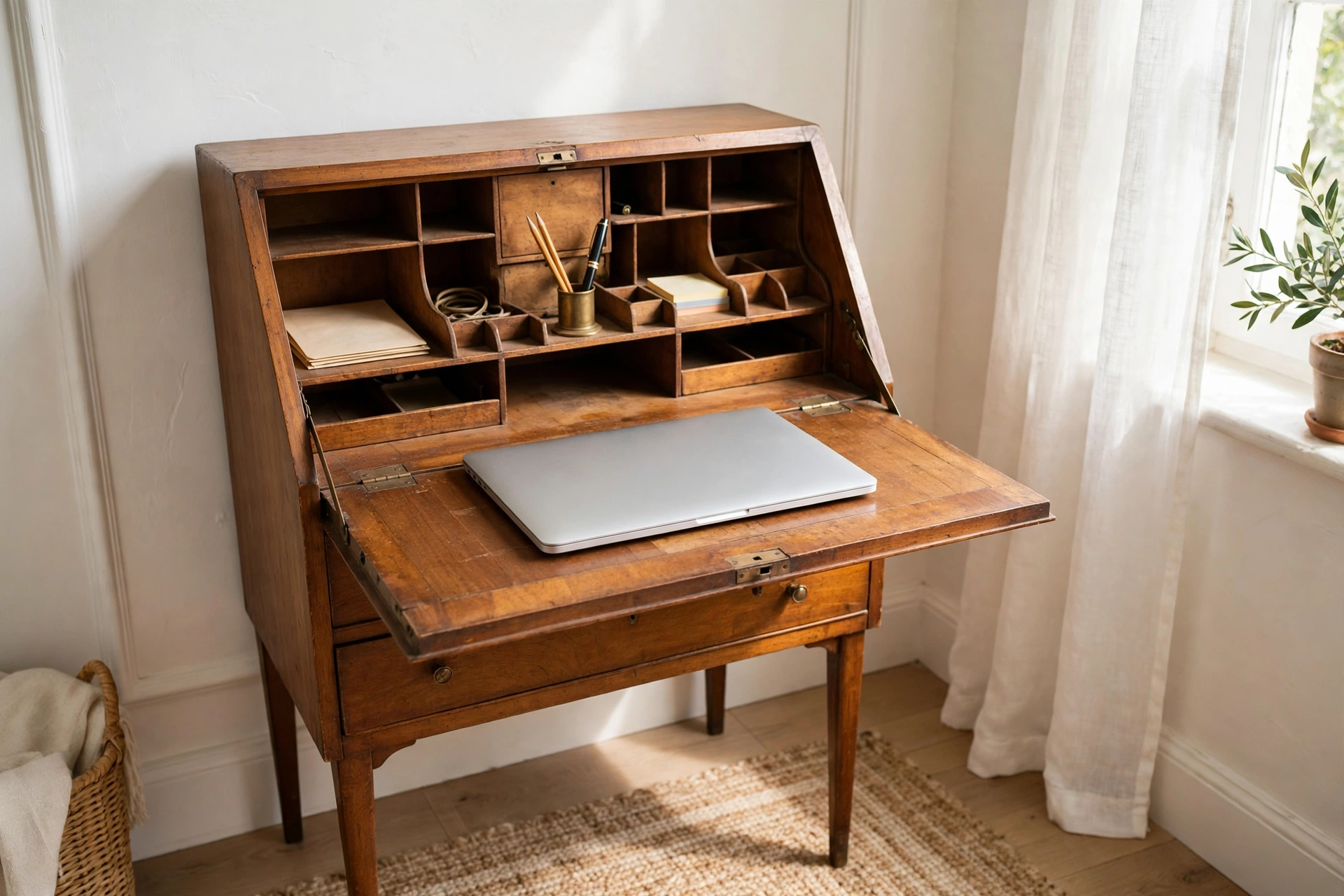
Best for: a living room or bedroom where the desk has to disappear after work.
A secretary desk is a small cabinet with a front that folds down to become the desk. Open, it holds a laptop and a notebook. Closed, it looks like a piece of furniture, and the work clutter, pens, papers, chargers, hides inside behind the closed front. It is the tidiest desk on this list, because closing it is the same as tidying up. When it is closed, it looks like a cabinet, which is why secretary desks for small spaces suit living rooms so well.
- Size: 30 to 36 inches wide, 16 to 20 inches deep when open, 12 to 16 inches deep when closed, 29 to 30 inches high at the writing surface
- Storage: shelves and small drawers inside, 8 to 10 inches deep, for notebooks and chargers
- Cost: usually $90 to $150
- Renter note: fully no-drill. It stands on its own feet and moves as one piece.
Do not load a secretary desk with a monitor. A laptop and a notebook are the limit. A monitor on a fold-down front pulls the hinges loose over time, and the screen is the first thing to hit the floor when the front gives way.
6. The floating desk
Best for: a flat wall where floor space matters more than storage.
A floating desk is a top fixed to the wall with no legs at all. The floor underneath stays completely clear, so a chair slides fully underneath and the room looks bigger than it is. It is the smallest footprint of any real desk, the desk is only as deep as its top. With no legs on the floor, floating desks for small spaces make a small room feel bigger than it is.
- Size: top 36 to 48 inches wide, 20 to 24 inches deep, 29 to 30 inches high
- Support: battens on the back wall and both side walls for spans up to 48 inches. Over 48 inches, add a steel stiffener underneath or one slim leg at the front.
- Cost: a top plus battens, usually $60 to $120
- Renter note: this one needs screws in the wall, so it is not the renter-friendly choice. If you cannot drill, use a narrow freestanding desk instead and keep the floating look with a pale top and no drawers underneath.
A floating desk on a flat wall is not the same as an alcove desk. An alcove has walls on two or three sides to hold the top, while a flat-wall floating desk needs solid fixings into studs. If your wall is plasterboard with no stud where you need it, do not hang a floating desk on it, use legs.
7. The standing desk for small spaces
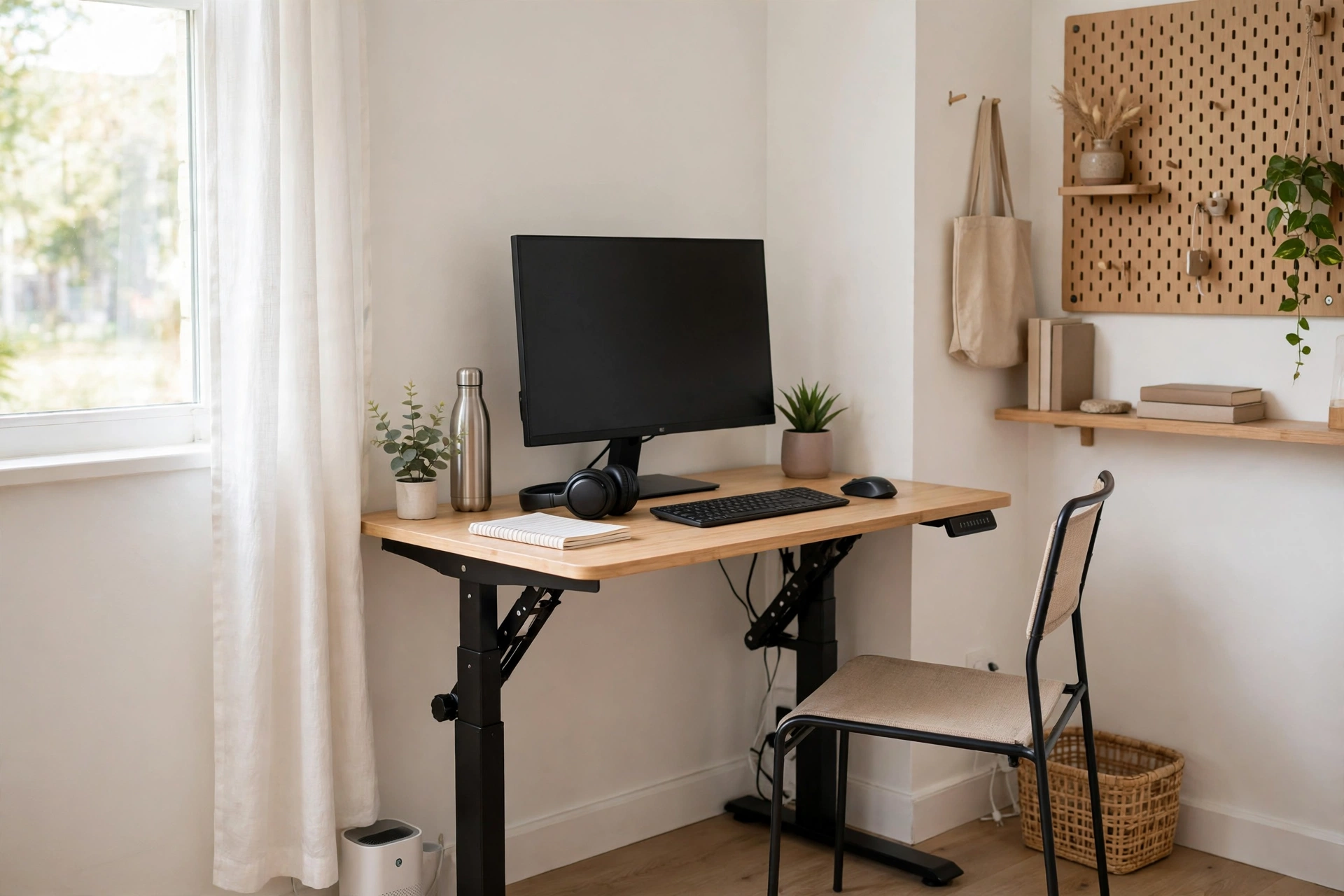
Best for: long work days, when sitting all day leaves your back and shoulders aching.
A standing desk is not a big desk. A compact desk that rises and falls is the small-space version: a top 36 to 42 inches wide and 20 to 24 inches deep, on a frame that adjusts from 29 inches sitting to 48 inches standing. The best compact desks for small spaces are the ones that fit the same spot as a normal small desk, the frame does the work, not the size.
- Size: top 36 to 42 inches wide, 20 to 24 inches deep
- Height range: 29 to 48 inches, adjustable with a button or a crank
- Chair rule: when you sit, the chair seat must be 18 to 20 inches high so your elbows sit level with the desk at 29 inches. When you stand, raise the desk so your elbows are at 90 degrees and the monitor is at eye level.
- Cost: a compact adjustable frame plus top, usually $140 to $200, the one desk on this list that goes over the $150 mark, and worth it only if you actually stand at it
- Renter note: fully no-drill. It stands on its own feet and plugs into one socket.
A standing desk converter is the cheaper halfway option: a platform that sits on your existing desk and lifts your monitor and keyboard to standing height. It costs less, but it adds weight and depth to a small desk, and it steals the space your keyboard used. If you want a standing desk, buy a real adjustable frame instead of a converter, in a small room, a converter makes a small desk smaller. A converter is a good test: if you stand at it every day, full desks for small spaces with an adjustable frame are worth the upgrade.
8. The fold-away and hideaway desk
Best for: a room where the desk is used for two hours a day and the space is used for something else the rest of the time.
A fold-away desk is a desk that closes up when you are done. A Murphy desk folds down from the wall and back up again. A fold-up desk has a top that hinges flat against the wall. A rolling desk cart folds flat and slides under a sofa or into a closet. All three do the same job: they give you a desk when you need one and a room when you do not. That disappearing act is the whole appeal of fold-away desks for small spaces in a room that does more than one job.
- Size: working surface 30 to 40 inches wide, 16 to 20 inches deep, 29 to 30 inches high
- Closed: 4 to 6 inches from the wall for a wall-mounted fold-away, or flat under a sofa for a rolling cart
- Cost: usually $80 to $150
- Renter note: wall-mounted versions need screws, so they are not renter-friendly. A rolling desk cart needs nothing fixed to the wall and moves anywhere.
The fold-away rule is simple: if it takes more than 10 seconds to open, you will stop opening it. Choose a design that opens in one movement, one hinge, one fold, one pull, and keep your laptop and notebook on it, so it is ready the moment it opens.
If your space is a corner, a bedroom, or a gamer setup
Not every small-space desk is a straight desk against a flat wall. If your only free spot is a corner, a corner desk uses the dead space where two walls meet, see our corner desk setup guide. If the desk lives in your bedroom, a small desk that fits between the bed and the wall works best, see our desk nook ideas. And if the desk is for gaming, a gaming desk needs room for a monitor, a keyboard, and a tower, see our gaming desk in a bedroom guide.
If the spot is a recess or an alcove, a built-in top with shelves above it turns the dead corner into a workspace, see our alcove desk ideas. Whatever the spot, the same rule applies to desks for small spaces: measure it first, then match the desk to it.
5 mistakes to avoid
1. Buying the desk before measuring the spot. A desk that is 2 inches too wide does not fit, and returning furniture costs time and money. Measure the wall, the depth, and the chair pull-out first.
2. Forgetting the chair. A desk needs 30 to 36 inches behind it for the chair. A desk that fits the wall but leaves no room to sit at it is not a desk, it is a shelf.
3. Choosing depth for a laptop when you need a monitor. A laptop fits on 20 inches. A monitor needs 24 inches, or your eyes sit too close to the screen. If you use a monitor, buy 24 inches deep.
4. Buying storage you cannot reach. Drawers under your knees are not storage, they are a wall. Keep the knee space clear and put the drawers on one side.
5. Picking the desk for the room, not for your work. A writing desk is right for writing. A laptop desk is right for a laptop. A desk for a monitor, a keyboard, and a notebook needs all three on the surface at once, measure your actual work, not the desk you like in the shop.
FAQ
What desks work best for small spaces?
A small computer desk 36 to 42 inches wide and 20 to 24 inches deep works best for most small rooms. If the wall is under 36 inches wide, choose a narrow desk 30 to 36 inches wide and 16 to 20 inches deep. If you need storage, choose a desk with one drawer unit on the side, keeping at least 24 inches of knee space clear.
Where can I find desks for small spaces?
Start by measuring your spot, then look for desks by size rather than by style. Search for the exact width and depth you need, for example “36 inch wide desk, 24 inch deep”, instead of browsing by look. A desk that matches your measurements is the one that fits, whatever the shop calls it.
What are the best desks for small spaces?
The best desk is the one that fits your spot, your chair, and your work. A small computer desk is the best all-rounder. A ladder desk is the best when you need storage too. A secretary desk is the best when the desk has to disappear after work. A fold-away desk is the best when the room is used for something else most of the day. The eight desks for small spaces in this guide all start from the same measurements above.
What are the best standing desks for small spaces?
A compact adjustable standing desk with a top 36 to 42 inches wide and 20 to 24 inches deep, adjusting from 29 inches sitting to 48 inches standing. It fits the same spot as a normal small desk. A standing desk converter is the cheaper option, but it steals space from a small desk, so a real adjustable frame is the better choice in a small room.
What are the best compact desks for small spaces?
A compact desk is a desk under 42 inches wide and 24 inches deep. The best compact desks are the ones with nothing underneath except your legs, a simple top, four legs, and a monitor arm on the back edge. Add one drawer unit on the side only if you need storage, and keep the knee space clear.
Start today
The best desks for small spaces are not the smallest desks. They are the desks that fit your spot, your chair, and your work, with the measurements to prove it. Measure your wall today, check the depth, the knee space, and the chair pull-out, and then pick one of the eight types above. One measurement now saves a return later, and a desk that fits is a desk you will actually use. Measure your spot, pick from the eight desks for small spaces above, and start with the one that fits.