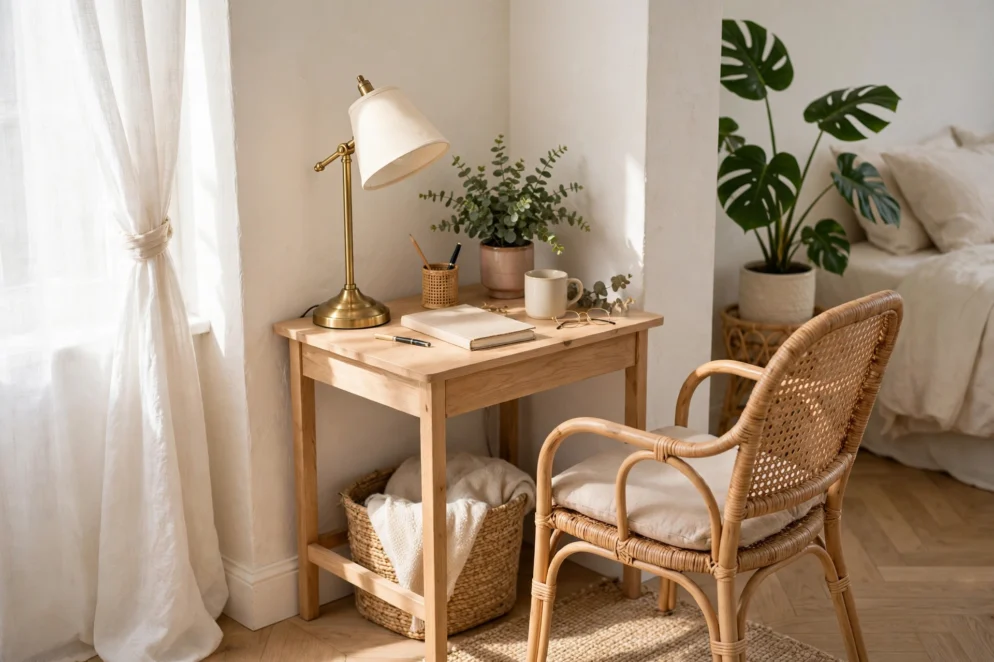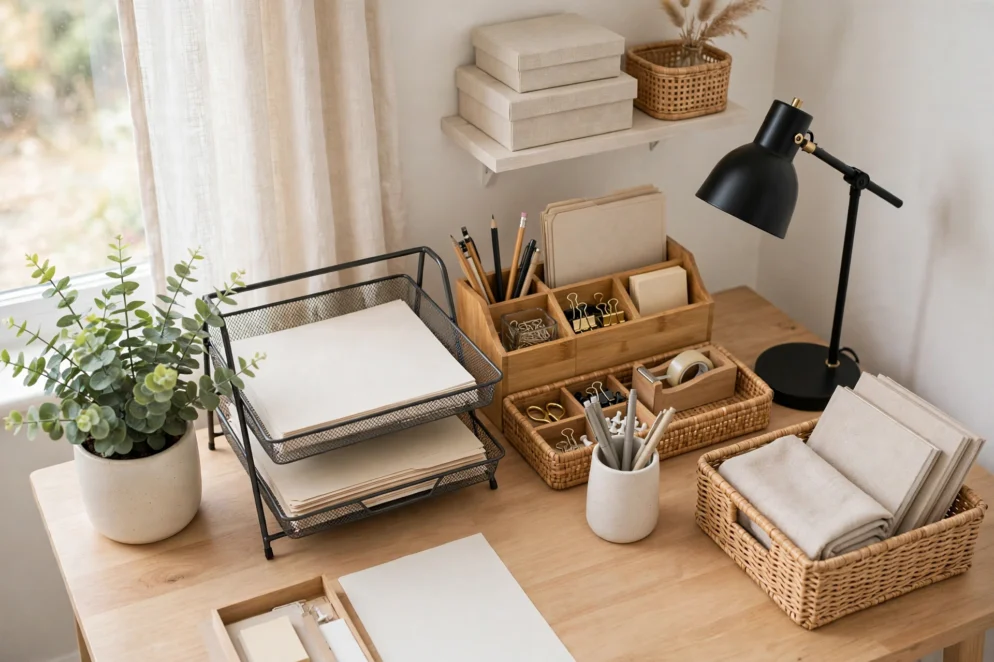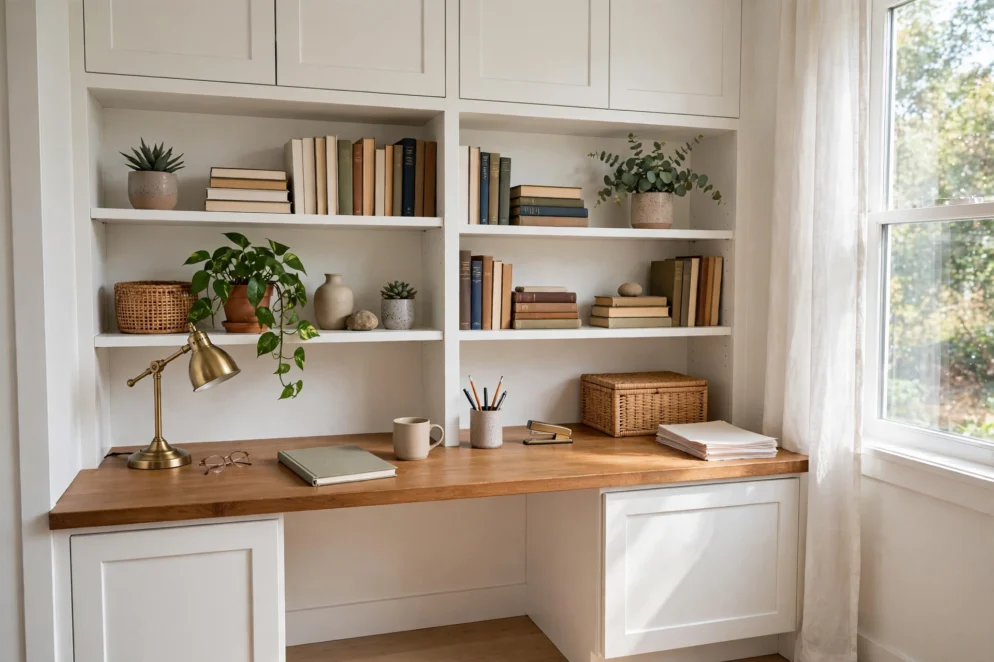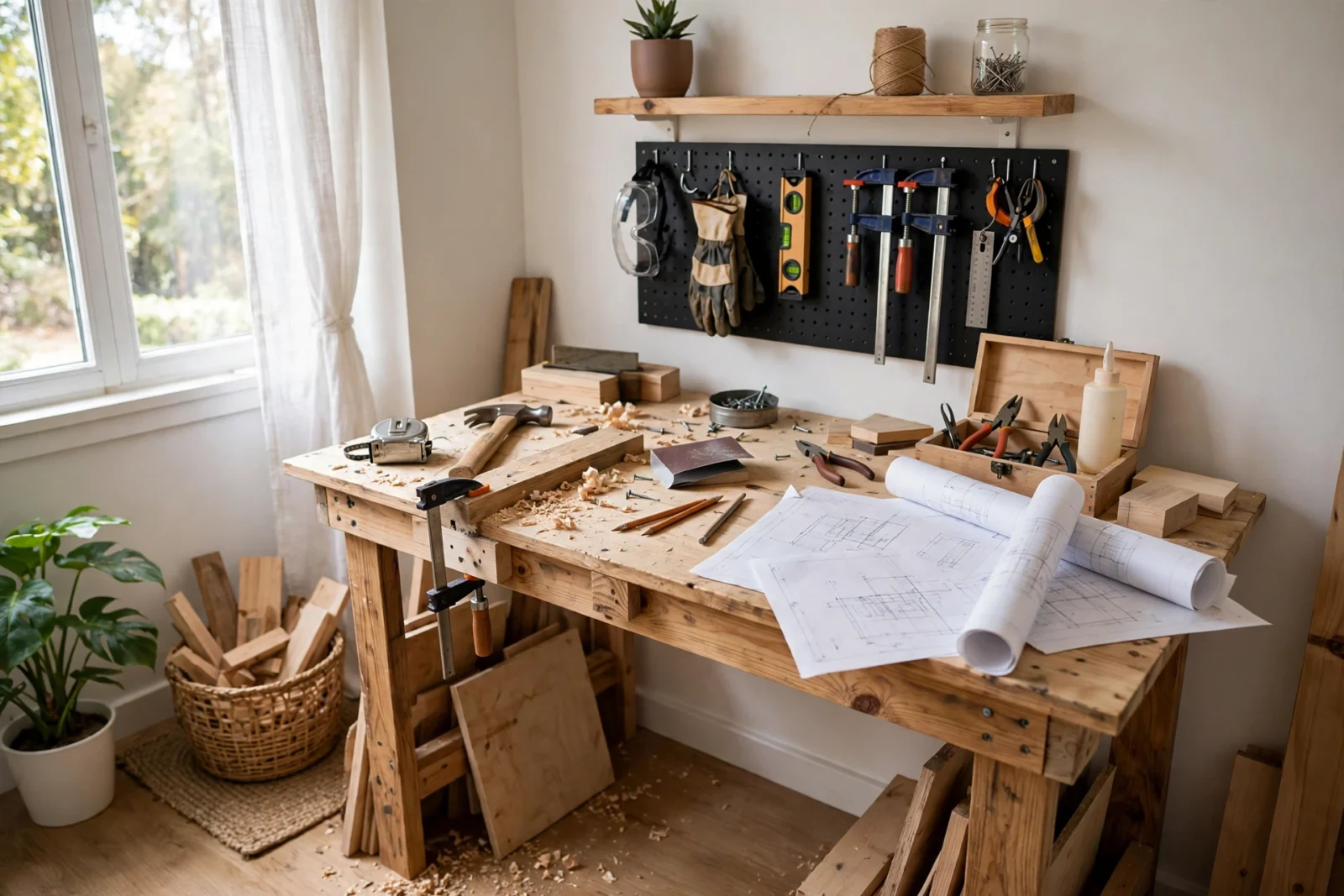
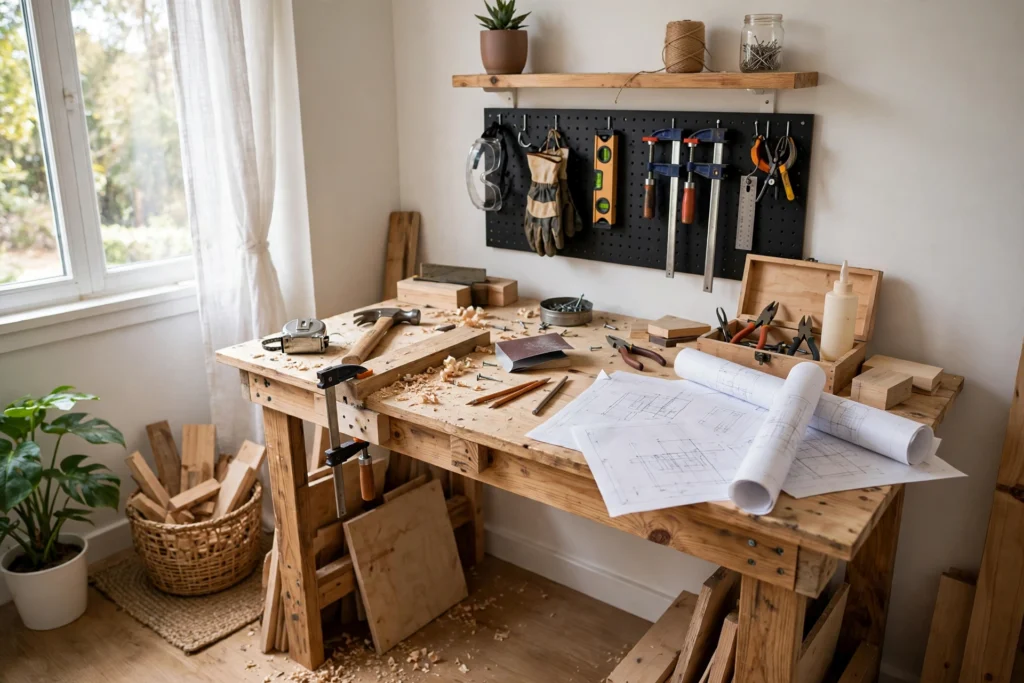
A diy desk is the cheapest way to get a desk that fits your wall exactly. You do not need carpentry skills, and you do not need expensive tools. You need a wood board, two brackets or two drawer units, and the right measurements, and this guide gives you all three, for six different desks, five of them under $150.
These diy desk ideas are for small home offices: fold-down desks that disappear, floating desks with no legs, standing desks you build yourself, butcher block desks, file cabinet desks, and a simple plywood desk for beginners. Each one comes with a cut list, a cost, and the exact measurements. No corner DIY here, that post is already live, and no paid plans: every plan in this guide is free.
Table of Contents
Before you build: measure, wood, tools
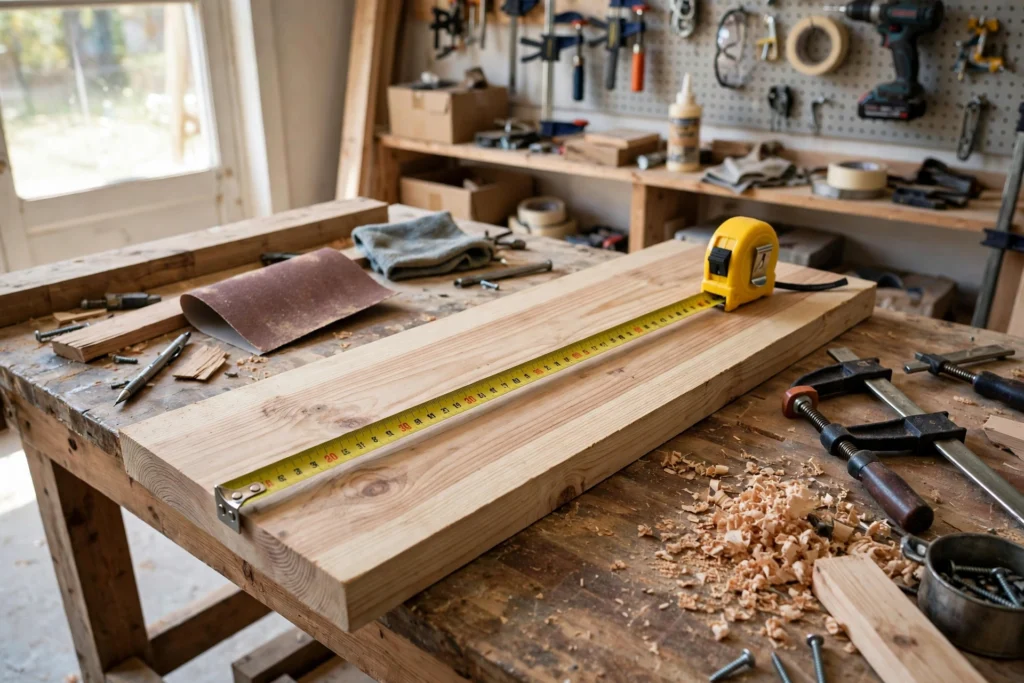
Best for: every build in this guide, measure twice, cut once.
Three things decide whether a DIY desk works: the measurements, the wood, and the tools.
- Measurements: desk height 28 to 30 inches, depth 20 to 24 inches (24 to 30 inches for an external monitor), knee space 24 inches wide and 27 inches high clear underneath. Measure the wall at three heights and use the smallest number minus 1/4 inch.
- Wood: plywood is the cheapest and easiest to cut ($25 to $40 for a 4×8 sheet of 3/4 inch plywood). Butcher block looks best and costs $40 to $60 for a 48 inch piece. Pine is light and cheap but dents easily. For a desk top, use 3/4 inch thick wood minimum, thinner boards sag under a monitor.
- Tools: a drill, a circular saw (or have the store cut the boards for you, most hardware stores cut for free), a level, a stud finder, and a tape measure. That is all. No table saw, no router, no special tools.
If you have never built anything, start with idea 5 (file cabinet desk) or idea 6 (simple plywood desk). They need no wall mounting at all.
1. Fold-down / murphy desk
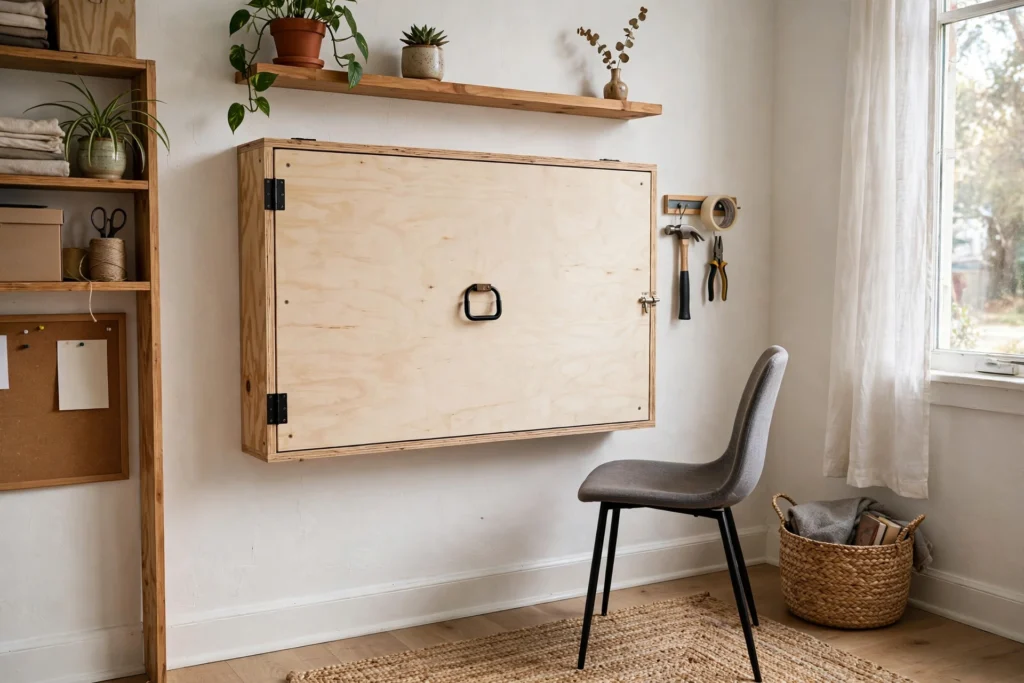
Best for: the smallest rooms, a desk that folds flat against the wall when you are done.
A fold-down desk (also called a murphy desk) is a wood board hinged to the wall, held up by two folding brackets. Open it and you have a full desk; fold it down and the wall is clear. It is the best diy desk for a room where the desk must disappear.
- Size: top 36 to 48 inches wide, 18 to 20 inches deep when open, 28 to 30 inches high. When folded, it sticks out from the wall by only 4 to 6 inches.
- Cut list: one plywood top (36 x 20 inches, 3/4 inch thick), one wall ledger board (36 x 4 inches), two folding shelf brackets (16 inches long, rated for at least 50 pounds each).
- Build it: screw the ledger board into two wall studs (studs are usually 16 inches apart, use a stud finder). Screw the folding brackets to the ledger and to the underside of the top. The top folds up against the wall on the brackets and folds down flat when you need it.
- Cost: plywood top ($25 to $40), two folding brackets ($20 to $30), ledger board and screws ($5 to $10), about $50 to $80 total.
- Weight limit: about 30 to 50 pounds of gear, a laptop, a notebook, a lamp. Do not put a heavy monitor on a fold-down desk unless the brackets are rated for it.
This is the desk to build if your office is also your bedroom, your living room, or a hallway. When work ends, the desk ends too.
2. Floating desk
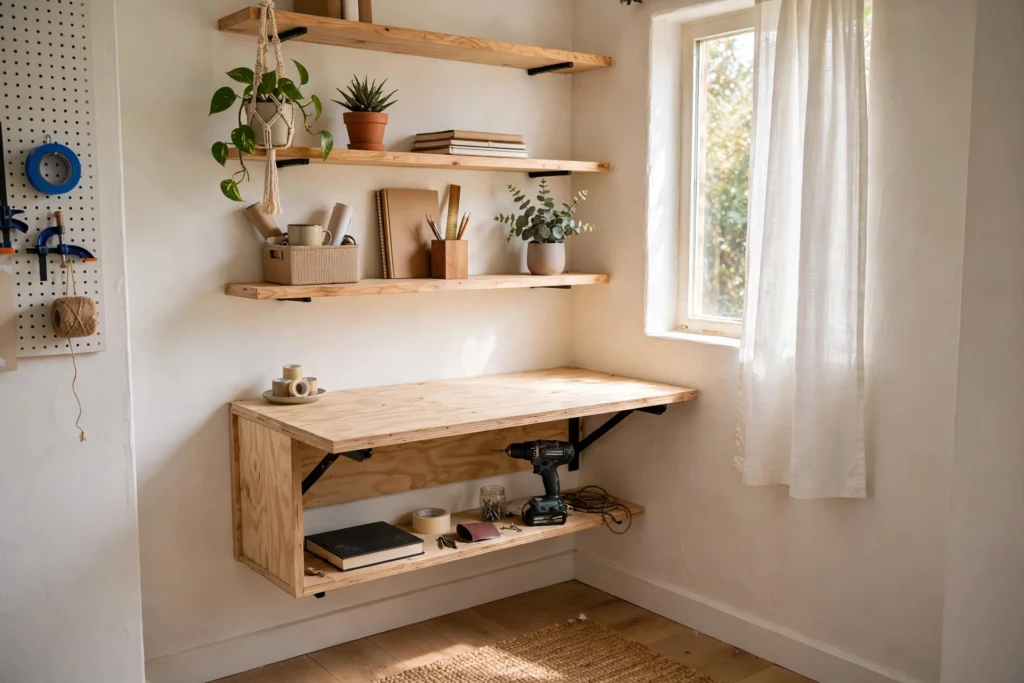
Best for: a desk with no legs, a wall-mounted desk that keeps the floor completely clear.
A floating desk is a wood board screwed into the wall studs with heavy-duty brackets, with nothing underneath. It looks clean, the room feels bigger, and you can slide a chair or a storage box underneath without moving anything. It is a good diy desk choice when floor space matters more than storage.
- Size: 36 to 48 inches wide, 20 to 24 inches deep, mounted at 28 to 30 inches high. Wider than 48 inches needs a middle bracket into a stud.
- Cut list: one wood board (48 x 24 inches, 3/4 inch thick), two heavy-duty brackets (rated for at least 50 pounds more than the desk will hold), screws into studs.
- Build it: find two studs with a stud finder, screw the brackets into the studs (not just the drywall, drywall anchors alone are not enough for a desk with a monitor on it), and screw the board down onto the brackets. Add one floating shelf above, 10 to 12 inches deep, 18 to 20 inches above the desk.
- Cost: wood board ($30 to $50), two heavy-duty brackets ($20 to $40), screws ($5 to $10), about $55 to $100 total.
- Weight limit: about 30 to 50 pounds of gear. Do not sit on it, and do not store heavy boxes on it.
Pair the floating desk with a floating shelf and you have a whole office on one wall, with zero floor space used.
3. Standing desk DIY
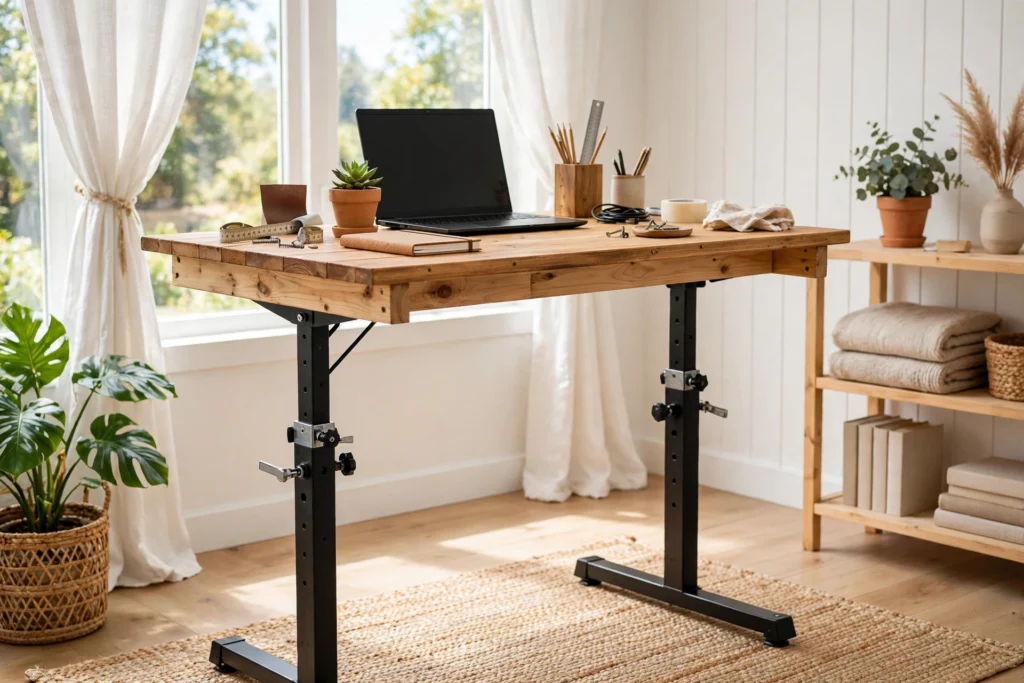
Best for: anyone who wants to stand while they work, a diy standing desk for a fraction of the price of a bought one.
A bought standing desk costs $300 or more. A DIY one costs under $150: a wood top on adjustable legs, or a converter that sits on your existing desk and lifts your monitor and keyboard up.
- Size: top 36 to 48 inches wide, 20 to 24 inches deep. Sitting height 28 to 30 inches; standing height 38 to 44 inches (measure from the floor to your elbow when standing, that is your standing desk height).
- Option A, adjustable legs: a wood top on two adjustable desk legs ($60 to $90 for a pair). Turn a crank or press a button and the desk moves from sitting to standing height. This is the simplest standing desk to build.
- Option B, converter: a small riser that sits on your existing desk and lifts the monitor and keyboard up ($40 to $80 for a DIY version: two shelf boards and a pair of folding brackets). Cheaper than legs, and it works on any desk you already own.
- Option C, fixed standing desk: a wood top mounted on the wall at standing height (38 to 44 inches), with a tall stool for sitting. The cheapest option, one board and two brackets, about $55 to $80 total, but you cannot lower it.
- Cost: legs + top ($100 to $150), converter ($40 to $80), fixed wall-mounted ($55 to $80).
- What to watch: a standing desk needs a monitor arm or a monitor riser, or the screen sits too low when you stand. A monitor arm costs $20 to $30 and fixes the height in both positions.
Start with the converter if you already have a desk. Build the adjustable-leg version if you want a real standing desk.
4. Butcher block desk
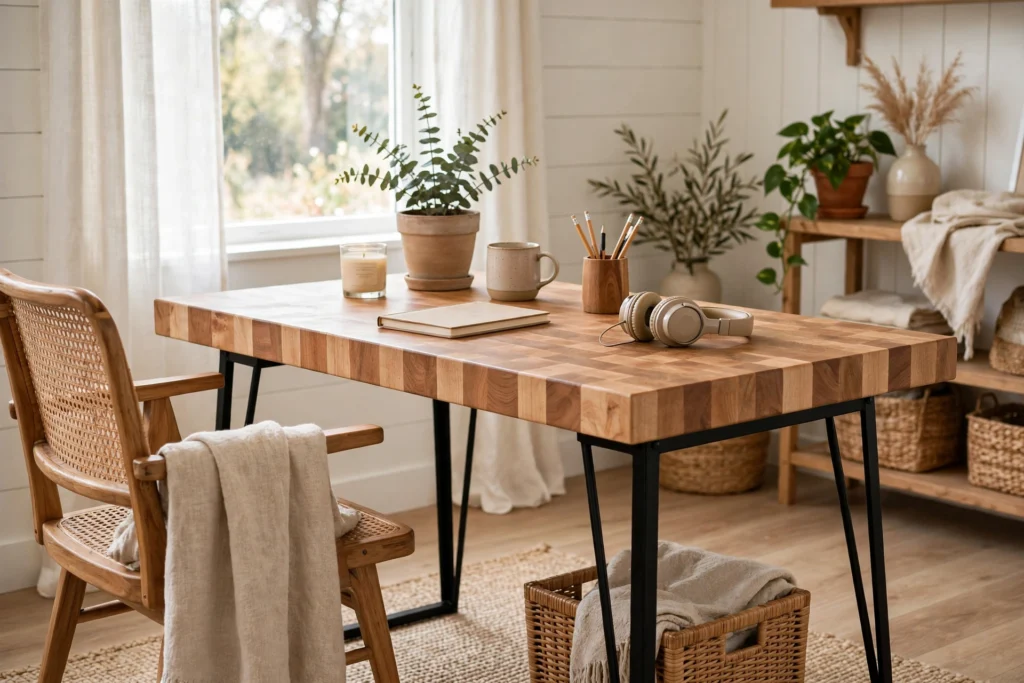
Best for: the best-looking DIY desk, a diy butcher block desk that looks bought, not built.
Butcher block is a thick wood slab made of glued wood strips. It looks warm and expensive, it is strong enough for a monitor and a laptop, and it costs far less than a solid wood desk top. This is the DIY desk that gets compliments.
- Size: top 48 to 60 inches wide, 24 to 25 inches deep (butcher block comes in 25 inch depths), 1.5 inches thick, at 28 to 30 inches high.
- Cut list: one butcher block top (48 x 25 inches), two metal legs or two drawer units to hold it up, screws.
- Build it: sand the top smooth (120 grit, then 220 grit), seal it with a clear coat or mineral oil so coffee rings do not stain it, then screw the legs or drawer units underneath. No cutting needed if you buy the top at the right size, most stores cut it for free.
- Legs or drawer units: metal hairpin legs ($30 to $50 for a set of four) look modern; two drawer units ($40 to $60 each) add storage and make the desk look built in. Either works, legs are cheaper, drawers are more useful.
- Cost: butcher block top ($40 to $60), legs ($30 to $50) or drawer units ($80 to $120), sealant ($10), about $80 to $120 with legs, $130 to $190 with drawer units, use legs to stay under $150.
- Care: re-oil the top every 6 months if you use mineral oil, or seal it once with polyurethane and forget about it.
This is the desk to build if you want one desk that looks good in photos and lasts for years.
5. File cabinet desk
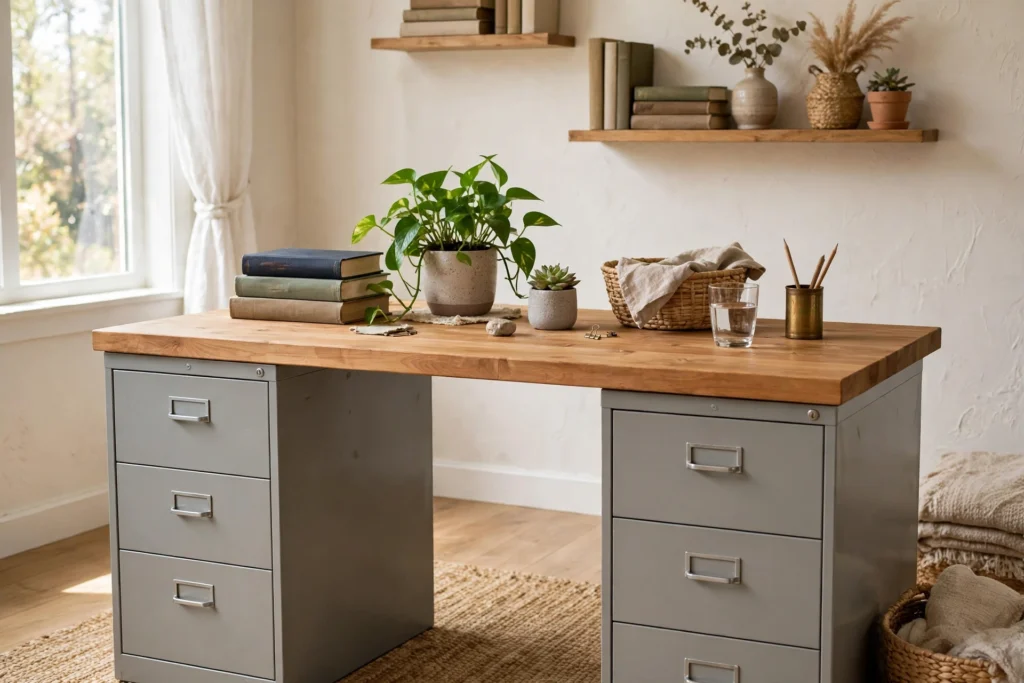
Best for: beginners and renters, a diy file cabinet desk with no wall holes and no cutting.
Two file cabinets, one wood top across them, and you have a desk with drawers, storage, and a work surface. It takes 30 minutes, needs no tools beyond a screwdriver, and comes apart when you move.
- Size: two file cabinets 15 inches wide each, 18 to 20 inches deep, with a wood top 48 to 60 inches wide and 20 to 24 inches deep across them. The gap between the cabinets is your knee space, at least 24 inches wide.
- Cut list: one wood top (48 x 24 inches, 3/4 inch thick, plywood or butcher block), two file cabinets. That is the whole list. No brackets, no screws into the wall.
- Build it: put the cabinets where you want them, lay the top across them, and screw the top to the cabinets from underneath (two screws per cabinet). Add a strip of non-slip matting under the top so it does not slide.
- Cost: two used file cabinets ($20 to $40 each from a thrift store or office clearance), wood top ($25 to $60), about $65 to $140 total. The cheapest desk in this guide if you buy used cabinets.
- Storage: each cabinet holds files, cables, chargers, and supplies. A file drawer needs 12 inches of depth for hanging folders, standard file cabinets already have it.
This is the desk to build first if you have never built anything. If you outgrow it, the cabinets and the top come apart and move with you.
6. Simple plywood desk
Best for: the easiest build, a diy plywood desk for absolute beginners, in one afternoon.
If the other five ideas feel like too much, build this one. A plywood top on four legs, or on two sawhorses, is a real desk. It is not fancy, but it works, and you can upgrade it later with shelves, drawers, or a better top. This is the simplest diy desk to build in one afternoon.
- Size: top 36 to 48 inches wide, 20 to 24 inches deep, 28 to 30 inches high.
- Cut list: one plywood top (48 x 24 inches, 3/4 inch thick), four wood legs (28 inches long) or two sawhorses, screws.
- Build it: screw the legs to the underside of the top, one in each corner, 2 inches in from the edges. Sand the top and the edges smooth (plywood edges are rough, sand them or cover them with iron-on edge banding, $5 a roll). Seal the top with a clear coat.
- Cost: plywood top ($25 to $40), four legs ($15 to $25) or two sawhorses ($20 to $30), screws and sealant ($10), about $50 to $80 total.
- Upgrade later: add a shelf above the desk, a drawer unit underneath, or swap the plywood top for butcher block. The legs and the size stay the same.
A plywood desk is also the best desk for a first DIY project with kids, the cuts are simple, the assembly is obvious, and the result is useful the same day.
Free plans and cut lists
Best for: anyone who wants a plan before they cut, every diy desk plan in this guide, free.
You do not need to buy plans. Here are the cut lists for all six desks, in one place. Print this section and take it to the store. Use them as the starting point for your diy desk, and adjust the width to your wall.
- Fold-down desk: top 36 x 20 inches (3/4 inch plywood), ledger 36 x 4 inches, two 16 inch folding brackets. Cost: $50 to $80.
- Floating desk: board 48 x 24 inches (3/4 inch), two heavy-duty brackets, screws into studs. Cost: $55 to $100.
- Standing desk (adjustable legs): top 48 x 24 inches, two adjustable legs. Cost: $100 to $150.
- Butcher block desk: top 48 x 25 inches (1.5 inch butcher block), four legs or two drawer units. Cost: $80 to $120 with legs, $130 to $190 with drawer units (under $150 with legs).
- File cabinet desk: top 48 x 24 inches (3/4 inch), two file cabinets. Cost: $65 to $140.
- Simple plywood desk: top 48 x 24 inches (3/4 inch plywood), four 28 inch legs. Cost: $50 to $80.
- Desk shelf (add-on for any desk): one shelf board 36 x 10 inches, two brackets, mounted 18 to 20 inches above the desk. Cost: $20 to $30.
Most hardware stores cut boards for free, bring the measurements and ask at the cutting desk. That turns every plan above into a no-saw project.
How much does a DIY desk cost?
The honest answer: less than you think.
- Cheapest: simple plywood desk or fold-down desk, $50 to $80.
- Mid-range: floating desk, file cabinet desk, standing desk converter, $55 to $140.
- Most expensive DIY: butcher block desk with drawer units, adjustable-leg standing desk, $100 to $190.
- Bought desk, same size: $150 to $400 for a basic desk, $300 or more for a standing desk. A DIY desk saves you $100 to $200 on every build.
- The under-$150 rule: five of the six desks in this guide cost under $150. The only one that can go over is the butcher block desk with drawer units, use legs instead and it stays under $150 too.
Buy the wood first, then the brackets, then the extras. The wood is the desk; everything else is support. That order keeps every diy desk in this guide under budget.
Renter note: which builds need wall holes?
Best for: renters, know before you drill.
- No wall holes at all: file cabinet desk, butcher block desk on legs or drawer units, simple plywood desk. These stand on the floor and move with you. Build any of these three if you cannot drill.
- Needs wall holes: fold-down desk, floating desk, wall-mounted standing desk. These screw into wall studs and leave holes when you move out. Check your lease first, if two small holes are allowed, the fold-down desk is the best use of them.
- The middle ground: a desk that stands on the floor (file cabinet or butcher block) plus a leaning ladder shelf beside it. You get the storage of a wall-mounted shelf with no holes at all.
If your landlord allows two small screw holes, use them on one floating shelf, it is the single best upgrade for a small desk. For everything else, use furniture that stands on the floor. A freestanding diy desk needs no holes at all, so it is the safest renter choice.
If you have not set up the desk yet
A DIY desk is only as good as its setup. Once the desk is built, set the chair, monitor, keyboard, and cables in their right places before you decorate it, see our desk setup guide. And if you have not chosen a desk type yet, see our desks for small spaces guide for the eight desk types that fit small rooms. For desk-height and posture guidance, see OSHA’s Computer Workstations guide.
5 mistakes to avoid
1. Skipping the stud finder. Brackets screwed into drywall alone will pull out under a monitor. Find the studs (usually 16 inches apart), screw into them, and the desk stays up.
2. Wrong height. A desk at 32 inches is too high for most chairs; a desk at 26 inches is too low. Build at 28 to 30 inches and measure from the floor to your elbow when sitting, that is your height.
3. Too thin a top. A 1/2 inch board sags under a monitor. Use 3/4 inch plywood or 1.5 inch butcher block. Thinner is not cheaper if you have to rebuild it.
4. No knee space. A desk with drawers on both sides and no gap in the middle leaves nowhere for your legs. Keep at least 24 inches wide and 27 inches high clear under the desk.
5. Buying the wood before measuring. Measure the wall at three heights, use the smallest number minus 1/4 inch, and then buy the wood. A board cut to the widest measurement will not fit.
FAQ
How do I build a DIY desk?
The simplest way: two file cabinets with a wood top across them, 30 minutes, one screwdriver, no wall holes. For a wall-mounted desk, find two studs, screw heavy-duty brackets into them at 28 to 30 inches high, and screw a 3/4 inch plywood top onto the brackets. Measure the wall first and use the smallest measurement minus 1/4 inch.
How much would a DIY desk cost?
$50 to $80 for a plywood or fold-down desk, $55 to $140 for a floating or file cabinet desk, $100 to $150 for a standing desk with adjustable legs. Five of the six desks in this guide cost under $150. A bought desk the same size costs $150 to $400.
What kind of wood for a DIY desk?
Plywood is the cheapest and easiest to cut ($25 to $40 for a 4×8 sheet of 3/4 inch plywood). Butcher block looks best and costs $40 to $60 for a 48 inch piece. Pine is light and cheap but dents easily. Use 3/4 inch thick wood minimum, thinner boards sag under a monitor.
How do I build a DIY floating desk?
Find two wall studs with a stud finder, screw two heavy-duty brackets into the studs at 28 to 30 inches high, and screw a 3/4 inch wood board (36 to 48 inches wide, 20 to 24 inches deep) onto the brackets. Drywall anchors alone are not enough, the brackets must go into studs.
How do I build a DIY wall mounted desk?
For a fold-down desk, screw a ledger board into two studs, attach two 16 inch folding brackets to the ledger and to the underside of a 36 x 20 inch plywood top, and the top folds flat against the wall when you are done. Total cost is about $50 to $80.
Start today
The best diy desk is not the most complicated one. It is the one you can build this weekend, two file cabinets and a wood top, or a plywood board on four legs, for under $80. Measure your wall today, buy the wood tomorrow, and build the desk on Saturday. The desk will fit your wall exactly, because you built it for your wall.